Your EV’s charging connector is a precision electrical part, not just a plug — and a little care goes a long way toward keeping it easy to use and free of corrosion. Here’s the safe way to clean and lubricate it, what to use, what to skip entirely, and where the advice changes depending on which connector your car has.
Quick Answer
Clean the connector with a damp cloth or electronics contact cleaner, then apply a thin layer of non-conductive dielectric silicone grease or dry silicone spray to the outer housing and rubber seal only — never the metal pins. Skip WD-40 and conductive lubricants, wipe away excess, and reapply roughly once or twice a year.
Key Takeaways
- Use only non-conductive dielectric silicone grease or dry silicone spray — never a conductive lubricant or standard multi-use WD-40 oil.
- Keep lubricant off the metal pins; apply it sparingly to the outer shroud and rubber seal only.
- Most automakers don’t list connector lubrication as required maintenance, and grease isn’t recommended on the high-current pins used for DC fast charging — check your owner’s manual first.
- Clean with a damp cloth or high-concentration (91%+) isopropyl alcohol, then let everything fully air-dry before charging.
- Reapply roughly once a year if you charge mainly in a garage; every three to four months if you charge outdoors or at public stations often.
- Inspect regularly for bent pins, cracks, or heat discoloration, and stop using a damaged connector until it’s checked.
Why Proper Lubrication Is Essential for EV Connectors
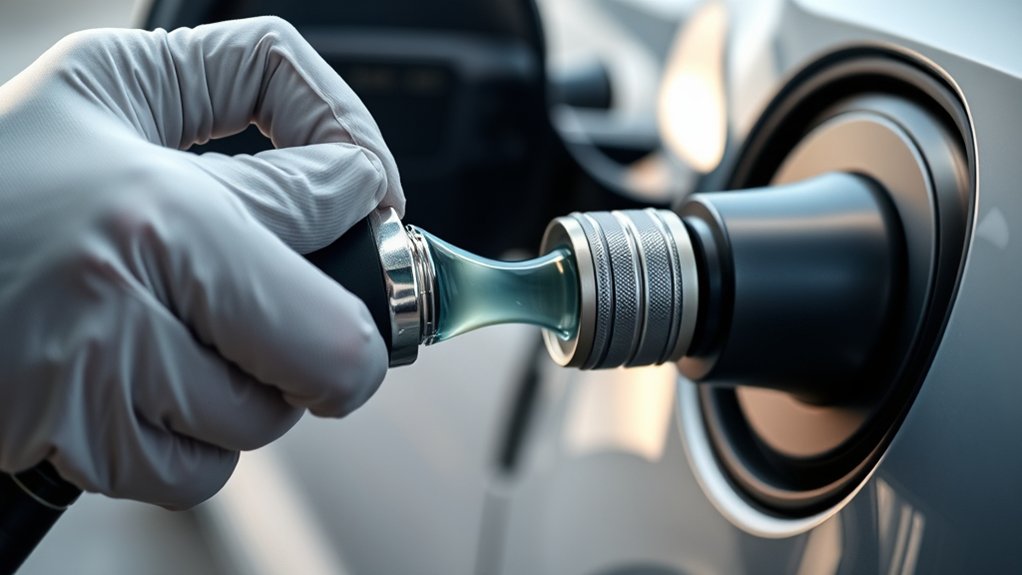
Skip lubrication long enough and you’ll notice more friction on every plug-in and unplug, which makes the connector harder to handle — especially if you have limited grip strength or arthritis.
A non-conductive lubricant like dielectric silicone grease helps in two ways: it reduces the physical wear that happens every time metal surfaces slide against each other, and it seals out moisture and dirt that would otherwise oxidize the contacts over time. Preserving that protective layer is what keeps contact resistance low, which matters because rising resistance at a connector is what eventually leads to overheating, signal loss, and full connector failure.
Left unaddressed, a worn connector can mean slower charging, intermittent connection errors, or an unplanned repair bill.
Note: Most vehicle and charger manufacturers don’t list connector lubrication as scheduled maintenance — it’s a widely practiced habit among EV owners rather than a factory requirement. Check your owner’s manual before adding anything to your charge port, and be more cautious around DC fast-charging pins (see below) than around a standard home Level 2 connector.
How to Choose the Right Lubricant for Your EV Connector
Use dielectric silicone grease or a dry silicone spray. Both are non-conductive, safe around electrical components, and designed to make insertion and removal smoother without interfering with the connection itself.
Avoid conductive lubricants entirely — they can bridge contacts and cause a short. Also skip standard multi-use WD-40: it’s a petroleum-based solvent, not an electronics product, and the company’s own dedicated Electrical Contact Cleaner (a different, purpose-built product) is what’s actually formulated to be safe on plastics and electrical components — the multi-use oil in the familiar blue-and-yellow can isn’t the same thing and can leave a residue that attracts dirt.
If you’re dealing with pins that see frequent plugging (rather than a rubber seal), a thin, fast-evaporating electrical contact cleaner is often a better choice than grease, since it doesn’t leave a sticky film that can trap grit.
Working with plastic housings? Food-grade silicone is a safe, compatible option that won’t degrade the material.
Warning: Never apply grease directly to the metal pins, and don’t apply grease at all to the high-current pins used for DC fast charging — the heat those pins generate isn’t a good match for dielectric grease, which some manufacturers explicitly caution against on high-amperage contacts. Keep lubricant on the outer shroud and rubber seal only.
Common Mistakes to Avoid Before Lubricating Your EV Connector
Two mistakes cause almost all connector-lubrication problems: using the wrong product, and using too much of the right one.
Incorrect Lubricant Selection
The wrong lubricant can cause short circuits or slowly degrade the connector’s plastic housing. Keep these in mind:
- Avoid conductive lubricants: these can bridge contacts and cause a short.
- Don’t use standard WD-40 or similar penetrating oils: they can leave residue and degrade some plastics over time.
- Use dielectric silicone grease or dry silicone spray: non-conductive, purpose-built, and less likely to attract dirt.
Always inspect and clean the connector before and after lubricating so you catch any underlying wear.
Overlubrication Risks
Too much lubricant attracts dirt and grime, gums up the fit, and makes cleanup harder. Keep it to a thin, barely-there layer.
| Issue | Consequence |
|---|---|
| Over-application | Attracts dirt, leading to gumming |
| Use of conductive grease | Risk of short circuits and electrical issues |
| Ignoring inspections | Masks problems instead of solving them |
Stick to a non-conductive product, apply it sparingly, and inspect regularly.
Step-by-Step Guide to Lubricating Your EV Connector
At a Glance
| Time Required | 10–15 minutes |
| Difficulty | Beginner-friendly |
| Tools Needed | Microfiber cloth, cotton swabs, 91%+ isopropyl alcohol or electronics contact cleaner, dielectric silicone grease or dry silicone spray, compressed air (optional) |
| Cost | $10–$20 for a bottle of dielectric grease or contact cleaner, which lasts many applications |
1. Gather Your Supplies and Power Down
Unplug the charging cable from both the vehicle and the power source, and give it a few minutes before you touch anything electrical. Lay out your cloth, swabs, alcohol or contact cleaner, and lubricant so you’re not hunting for supplies mid-task.
2. Clean the Connector First
Wipe down the outer housing with a damp cloth or electronics contact cleaner. For the pins themselves, a cotton swab dipped in 91%+ isopropyl alcohol removes oils and light corrosion without leaving residue — use it sparingly and never pour or spray liquid directly into the port. Let everything air-dry for about 15 minutes before you touch it again.
3. Apply Lubricant to the Outer Shroud Only
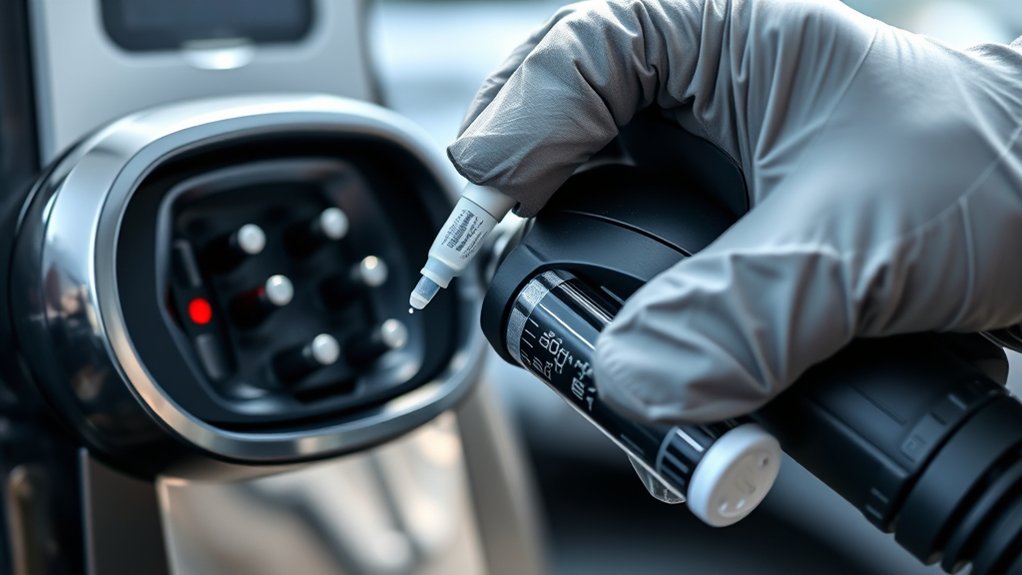
Put a small amount of dielectric silicone grease or dry silicone spray on a swab or your fingertip, then work it into the outer housing and rubber seal. Avoid the metal pins entirely.
Pro Tip: Less is more here. A thin, barely-visible film does the job — anything thicker just becomes a magnet for dust and grit.
4. Wipe Away Excess and Reinspect
Use a clean, dry cloth to remove any lubricant that’s sitting on the surface rather than absorbed into the seal. Do a final visual check for wear or damage before you plug back in.
Recommended Lubrication Frequency for Your EV Connector
There’s no single number that fits every driver — it depends on how and where you charge. If your car spends most of its time charging in a garage, once a year is usually enough. If you charge outdoors or rely on public stations regularly, plan on cleaning and reapplying every three to four months, since dust, humidity, and temperature swings speed up wear on the seals and contacts.
Before each application, inspect the connector for wear and make sure it’s clean and dry. A thin coat of dielectric grease helps prevent buildup and limits how much dirt the seal attracts between cleanings, but more isn’t better — excess lubricant gums up the connection and can actually make charging less reliable, not more.
Critical Signs Your EV Connector Requires Immediate Repair
Watch for these signs that go beyond routine cleaning and lubrication:
- Overheating Connectors: excessive heat during or after charging can point to contact resistance or internal damage — stop using the connector and have it inspected.
- Difficulty Connecting or Disconnecting: persistent resistance often means wear inside the connector, not just a lack of lubrication.
- Visible Damage: cracks or breaks in the housing are a safety issue, not a cosmetic one.
Interruptions mid-charge and noticeably longer charging times are also worth investigating. If cleaning and lubrication don’t resolve the issue, contact your vehicle manufacturer, your charging equipment’s support line, or a licensed electrician rather than continuing to use a suspect connector.
How to Clean and Maintain Your EV Connectors
Before you clean anything, power down the charger and disconnect it from both ends — this is a live electrical component, not just a dirty plug. Once it’s safe to handle, wipe the housing with a damp cloth or electronics contact cleaner, and use a swab with 91%+ isopropyl alcohol for the pins themselves, in small amounts, letting it fully evaporate before reconnecting.
Inspect for wear, bent pins, or physical damage as you go, and address anything you find rather than lubricating over it.
Apply dielectric grease or dry silicone spray sparingly to the outer shroud — never to the point where excess is visible.
When the connector isn’t in use, a weatherproof cover helps protect it from the elements, and keeping a simple log of when you last cleaned and inspected it makes it easier to track wear over time. Routine inspection is also what ENERGY STAR recommends as part of ongoing EV charger upkeep, alongside any manufacturer-specific maintenance.
Best Practices for Maintaining and Protecting Your EV Connectors
A few habits go a long way toward keeping your connector reliable:
1. Regular Cleaning: a damp cloth or electronics contact cleaner removes dirt before it becomes a problem.
2. Apply Silicone Lubricant Sparingly: a thin coat of dielectric silicone grease on the outer housing eases insertion and removal without attracting dust.
3. Inspect Routinely: check for wear, bent pins, or frayed wires, and don’t lubricate over damage — repair it instead.
4. Know Your Connector Type: most EVs built before 2025 use the SAE J1772 standard for AC charging, but most manufacturers have committed to shifting new vehicles to the NACS connector (SAE J3400) starting in 2025. The cleaning and lubrication basics above apply to both, but always keep grease off any DC fast-charging pins regardless of connector type.
5. Protect When Not in Use: a weatherproof cover reduces corrosion risk between charges.
6. Document Your Maintenance: a simple log of cleanings and inspections makes it easier to spot a developing problem early.
Frequently Asked Questions
Is it safe to put isopropyl alcohol in a charging port?
Pouring or spraying liquid directly into a charging port isn’t a good idea, but a small amount of 91%+ isopropyl alcohol applied with a cotton swab, then fully air-dried, is a standard way to clean pins and contacts. The key is using a high concentration, applying sparingly, and letting it evaporate completely before charging.
What lubricant is safe for electrical connections?
Dielectric silicone grease or dry silicone spray. Both are non-conductive, resist attracting dirt when applied sparingly, and won’t create a short-circuit risk the way a conductive lubricant would.
Can I use WD-40 to clean a charging port?
Not the standard multi-use WD-40 — it’s a petroleum-based oil, not an electronics product, and can leave a residue that attracts dirt. An electronics contact cleaner (WD-40 makes a separate, purpose-built one) is a safer choice for this job.
How do I clean a J1772 connector?
Wipe the exterior with a damp cloth, use a swab with 91%+ isopropyl alcohol on the pins, let it fully dry, then check the rubber O-ring for wear. That combination handles routine buildup without risking the electronics.
Do carmakers actually recommend lubricating the charging connector?
Generally, no — most owner’s manuals don’t list it as scheduled maintenance. It’s a widely practiced habit among EV owners that can help with wear and moisture protection, but it’s optional rather than required, and it’s best avoided on high-current DC fast-charging pins.
Conclusion
Lubricating your EV charging connector isn’t a required fix, but it’s a low-cost habit that keeps plugging in easier and helps head off corrosion before it becomes a real problem. Clean it first, use a non-conductive dielectric grease or dry silicone spray sparingly, keep it off the pins entirely, and check your owner’s manual if you’re ever unsure whether it applies to your setup. A few minutes every few months is all it takes to keep charging smooth.
Sources
- Joint Office of Energy and Transportation — SAE J3400 Charging Connector — backs the CCS1-to-NACS/J3400 connector transition
- U.S. DOE Alternative Fuels Data Center — Operation and Maintenance for EV Charging Infrastructure — backs general charging-equipment maintenance guidance
- SAE International — J1772 Standard — backs the J1772 connector standard reference
- WD-40 Company — Electrical Contact Cleaner Lubricant — backs the distinction between multi-use WD-40 and their electronics-safe contact cleaner
- ENERGY STAR — Electric Vehicle Chargers — backs routine inspection and maintenance guidance
- NYE Lubricants — Avoid Electric Vehicle Recalls with Grease — backs how dielectric grease reduces fretting wear and oxidation at connectors