

Your EV charging cable carries a lot of power, so storage is not just about keeping the garage tidy. Good cable storage helps protect the outer jacket, connector pins, strain relief, and plug from dirt, moisture, crushing, and sharp bends. The safest routine is simple: unplug, inspect, coil loosely, secure gently, and store the connector where it stays clean and dry.
Quick Answer
To store an EV charging cable, unplug it, let it cool, inspect it for damage, wipe the connector dry, and coil it in loose loops about 12 to 18 inches wide. Secure it with a Velcro strap, not tape, then hang it on a holder or place it in a clean, dry storage bag or box.
Key Takeaways
- Coil the cable loosely and follow the cable’s natural bend instead of forcing tight loops.
- Keep the connector capped, dry, and off the floor so dirt and moisture do not collect inside it.
- Use wall hooks, holsters, reels, or storage bags that support the cable without pulling on the connector.
- Stop using the cable if you see cracked insulation, exposed wire, melted plastic, corrosion, loose pins, or a burning smell.
- Outdoor storage should use outdoor-rated charging equipment and weather-resistant cable holders that do not trap water.
At a Glance
| Time Required | 5 to 10 minutes after charging ends |
| Difficulty | Easy |
| Tools Needed | Velcro strap, dry microfiber cloth, connector cap, wall hook, holster, reel, or storage bag |
| Cost | $0 if you already have a strap or hook; about $10 to $60 for most holders, bags, or holsters |
Why Proper EV Charging Cable Storage Matters
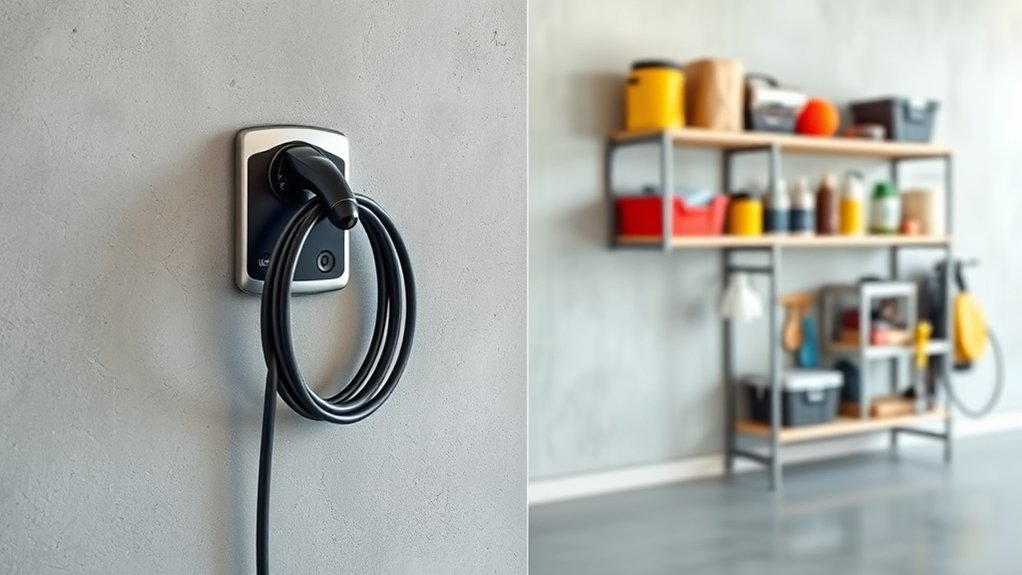
Proper storage protects your EV charging cable from the damage that happens when it is dragged across concrete, pinched under tires, left in standing water, or bent too tightly. The cable jacket, strain relief, plug, and connector all need support.
The Alternative Fuels Data Center lists secure cable storage, periodic part checks, and keeping charging equipment clean as part of EV charging infrastructure maintenance. That same idea applies at home: the cable should be stored where it will not be crushed, soaked, twisted, or used as a trip line.
Good cable management also makes charging easier. A dedicated holder keeps the cable ready for the next session, protects the connector from dirt, and keeps walking paths clear for children, pets, and older adults.
Warning: Do not use an EV charging cable with cracked insulation, exposed wire, melted plastic, bent pins, corrosion, a loose plug, repeated fault lights, or a burning smell. Stop using it and contact the charger maker, vehicle maker, or a qualified electrician.
Before You Store Your EV Charging Cable
Take a minute to check the cable before you coil it. This habit helps you catch small problems before they become safety risks.
- Stop the charging session first. Use the vehicle, charger app, or charging station control to stop charging before unplugging when your equipment requires it.
- Unplug by the handle, not the cord. Pulling on the cable can strain the wiring and connector.
- Let the cable cool if it feels warm. A little warmth after charging can be normal, but heat that feels unusual, comes with an odor, or appears near a plug or connector needs attention.
- Check for moisture and grit. Wipe the outside with a dry microfiber cloth. Do not spray water or cleaner into the connector.
- Cap the connector if your cable has a cap. This keeps dust, insects, and splash water out of the contact area.
Note: Home EV charging usually uses Level 1 or Level 2 equipment. The AFDC home charging guide says outdoor installation and use can be safe, including rain, when outdoor-rated equipment is used.
Step-by-Step Guide to Rolling Up Your Cable
The best way to roll up an EV charging cable is to keep the loops relaxed. A cable that fights the coil is telling you the bend is too tight.
Proper Rolling Technique
- Start with the cable straight. Lay it out gently or shake out twists by hand. Do not yank it.
- Hold the cable near the middle or plug end. Keep the connector off the ground while you begin.
- Make loose loops. Aim for loops about 12 to 18 inches wide, or larger if the cable is thick and naturally wants a wider bend.
- Follow the cable’s natural curve. Do not force it into a tight coil or wrap it sharply around the charging unit.
- Secure it with a soft strap. Use a Velcro strap or wide reusable cable tie. Do not cinch it tight enough to dent the jacket.
- Support the cable weight. Hang the loop on a hook or place it in a storage bag or box so the connector is not carrying the full load.
Pro Tip: If your cable twists each time you coil it, use the over-under method: make one loop in the normal direction, then gently reverse the next loop. This reduces twist buildup and helps the cable lie flat next time.
Storage Solutions Overview
The right storage solution depends on the cable type and where you charge.
- Portable Level 1 cordset: Store it in its original bag, a padded storage case, or a clean bin in the trunk or garage.
- Tethered Level 2 wall charger: Use a wall-mounted hook, cable dock, or holster beside the charger so the connector stays off the floor.
- Detachable Level 2 cable: Coil it loosely and store both ends capped if caps are supplied.
- Public charging cable: Return it to the station holster. Do not leave it lying across the parking space.
The AFDC charging station guide explains that the connector is the part plugged into the vehicle. That connector is the piece you should protect most carefully during storage.
Avoid These Common Mistakes in Cable Storage
Small storage mistakes can shorten the life of the cable or create a safety problem. Avoid these habits:
- Do not coil the cable tightly. Tight loops can stress the jacket and internal conductors.
- Do not wrap it around sharp brackets. Use a wide hook or rounded holder instead.
- Do not hang the cable by the connector. The loop should carry the weight, not the plug or latch.
- Do not leave it on the ground. A cable on the floor can collect grit, become a trip hazard, or be damaged by tires.
- Do not store it wet in a sealed bag. Let the outside dry first so moisture is not trapped around the connector.
- Do not repair the cable with sticky tape. Tape is not a safe fix for damaged insulation, heat damage, or connector problems.
- Do not use unapproved extension cords or adapters. Use only equipment approved by your vehicle maker, charger maker, or charging network.
Cable Organizer Best Practices
A good cable organizer keeps the charging area clean without stressing the cable. Look for a holder that is wide, smooth, strong enough for the cable weight, and placed close enough to the charger that the cable does not hang under tension.
For a garage wall, a rounded hook and connector holster work well. For a carport or driveway charger, choose a weather-resistant holster made for outdoor use. For a portable cable, a storage bag with enough room for loose loops is better than a tight pouch.
When choosing charging equipment, safety certification matters. ENERGY STAR notes that ENERGY STAR certified EV chargers are tested for safety by a nationally recognized testing laboratory. The AFDC also recommends safety-certified equipment and a certified electrical contractor for home charging equipment.
Indoor and Outdoor Storage Solutions for EV Charging Cables
Indoor and outdoor storage solve the same problem in different conditions. Indoors, the goal is neat access and trip prevention. Outdoors, the cable also needs protection from rain, snow, sun, grit, and standing water.
Indoor Storage Techniques
- Use a wall hook near the charger. This keeps the cable off the floor and makes it easy to grab.
- Add a connector holster. A holster protects the plug face and latch from dust and accidental knocks.
- Keep it away from sharp tools. Do not store it where bikes, shovels, jacks, or garage equipment can scrape it.
- Keep it away from heat sources. Avoid heaters, direct furnace vents, and hot engine parts.
- Leave enough slack. A cable under tension can strain the connector and wall unit.
Outdoor Protection Methods
Outdoor storage should use equipment designed for outdoor use. A weather-resistant dock can shield the connector from rain and dust, but it should not trap water inside the plug area. If your charger is mounted outdoors, follow the charger maker’s instructions for cable routing and storage.
| Storage Method | Best For | Tips |
|---|---|---|
| Weather-resistant holster | Outdoor wall chargers | Mount it high enough to avoid puddles and snow buildup. |
| Wide wall hook | Garage or carport use | Choose a rounded hook so the cable does not crease. |
| Storage bag or box | Portable cordsets | Dry the cable before closing the bag or lid. |
| Cable reel made for EV cables | Longer home charging cables | Do not charge while the cable is tightly wound unless the product maker allows it. |
How to Inspect Your Cable Before Storage
Inspect your EV charging cable before storage and again before the next charging session. Focus on the areas that bend, plug in, or touch the ground.
- Outer jacket: Look for cracks, cuts, flat spots, swelling, or worn areas.
- Connector face: Check for dirt, water, corrosion, bent pins, loose parts, or a damaged latch.
- Strain relief: Inspect the flexible area where the cable enters the connector or plug.
- Wall plug or charging unit end: Look for discoloration, melting, looseness, or heat marks.
- Cable feel: Run the cable through your hand and check for stiff spots, bulges, or internal kinks.
- Error signs: Pay attention to repeated charger faults, tripped breakers, flickering status lights, or charging that stops unexpectedly.
If you find damage, do not cover it with tape or keep charging “just one more time.” EV charging equipment should be repaired or replaced according to the maker’s instructions. If the outlet, breaker, or hardwired charger appears damaged, call a qualified electrician.
How to Clean and Protect the Connector
Keep cleaning simple. Use a dry microfiber cloth to wipe the outside of the connector and cable. If the connector is dirty inside, follow your vehicle or charger manual. Do not poke metal tools into the connector, and do not spray cleaner, water, or compressed air into the plug unless the manufacturer specifically allows it.
When the cable is stored, point the connector downward or place it in a holster so dust and water do not collect in the contact area. If your cable has a rubber cap, close it after the connector is dry.
Note: The AFDC infrastructure checklist includes weather impacts, maintenance needs, inspections, and safety as planning factors for charging equipment. Those same concerns matter for home cable storage.
Travel and Seasonal Storage Tips
If you carry a portable charging cable in your EV, keep it in a dedicated bag or under-floor cargo area where it will not slide around. Do not store it loose beside sharp tools, tire chains, jack handles, or wet floor mats.
In winter, shake off snow and slush before storing the cable. At home, keep the cable off icy walkways. In summer, avoid leaving a portable cordset baking in direct sun for long periods when a shaded, ventilated storage spot is available.
For long-term storage, coil the cable loosely, cap the connector, keep it dry, and check it before using it again. If the cable has been crushed, soaked, chewed, or exposed to unusual heat, inspect it carefully before connecting it to your vehicle.
Frequently Asked Questions
How do you store an electric car charging cable?
Unplug it safely, inspect it, wipe it dry, coil it in loose loops, secure it with a soft Velcro strap, and store it on a rounded hook, holster, reel, bag, or dedicated box. Keep the connector capped and off the ground.
How do you neatly store charging cables?
Use a wall-mounted hook or cable holster near your charger. Coil the cable loosely, hang the loop evenly, and place the connector in its dock. For portable cables, use a storage bag with enough room so the cable is not sharply bent.
What is the 80/20 rule for EV charging?
The 80/20 rule is usually a battery-care habit, not a cable-storage rule. It often means keeping the battery between about 20% and 80% for daily use when your vehicle maker recommends it. Some EVs and battery types have different guidance, so follow your owner’s manual.
Can I just wrap my charging cable in sticky tape?
No. Sticky tape is not a safe repair for an EV charging cable. If the jacket, connector, plug, or strain relief is damaged, stop using the cable and follow the charger or vehicle maker’s repair or replacement instructions.
Can I leave an EV charging cable outside?
You can store a cable outside only when the charger, cable, and storage setup are designed for outdoor use. Use outdoor-rated equipment, keep the connector in a weather-resistant holster, and avoid puddles, snow buildup, and direct ground contact.
Should I unplug the charging cable from the wall before storing it?
For a portable cordset, unplug it from the wall and vehicle before storing it. For a hardwired or tethered wall charger, return the connector to its holster and coil the cable on the holder after charging ends.
Conclusion
Proper EV charging cable storage helps reduce wear, keeps the connector cleaner, and makes your charging area safer. The best routine is simple: unplug safely, inspect the cable, wipe it dry, coil it loosely, secure it with a soft strap, and store it off the ground. Use outdoor-rated storage when the cable lives outside, and stop using any cable that shows signs of heat, cracking, corrosion, or connector damage.
Sources
- Alternative Fuels Data Center: Charging Electric Vehicles at Home — supports home charging levels, outdoor-rated equipment, safety-certified equipment, and NEC Article 625 context.
- Alternative Fuels Data Center: Operation and Maintenance for EV Charging Infrastructure — supports secure cable storage, periodic checks, and keeping charging equipment clean.
- ENERGY STAR: Electric Vehicle Chargers — supports safety-certified EV charger guidance and charger buying considerations.
- Alternative Fuels Data Center: Electric Vehicle Charging Stations — supports EV charging connector terminology and charging level context.
- Alternative Fuels Data Center: Procurement and Installation for EV Charging Infrastructure — supports planning factors such as weather impacts, maintenance, inspections, and safety.