
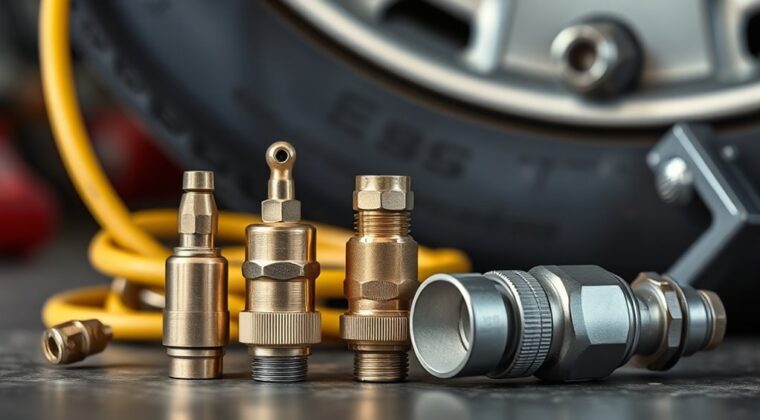
A tire inflator air chuck is the fitting you use to seal onto a valve stem and control compressed-air flow during inflation or pressure checks. In open-flow chucks, air moves freely as soon as you connect them, which suits gauges and continuous inflation. In closed-flow chucks, an internal valve blocks flow until the chuck seats, reducing loss. You can match straight, 90-degree, locking, or dual-wheel styles to the job, and there’s more to compare.
Key Takeaways
- An air chuck connects a tire inflator to the valve stem and depresses the core to control airflow.
- Open flow chucks allow unrestricted air movement for inflation and pressure testing.
- Closed flow chucks use an internal check valve to reduce air loss until properly seated.
- Common styles include straight, 90-degree, locking, dual-wheel, and XL chucks for different valve access needs.
- Replace worn chucks if you notice leaks, slipping grip, reduced airflow, or damaged seals and actuators.
What Is an Air Chuck?
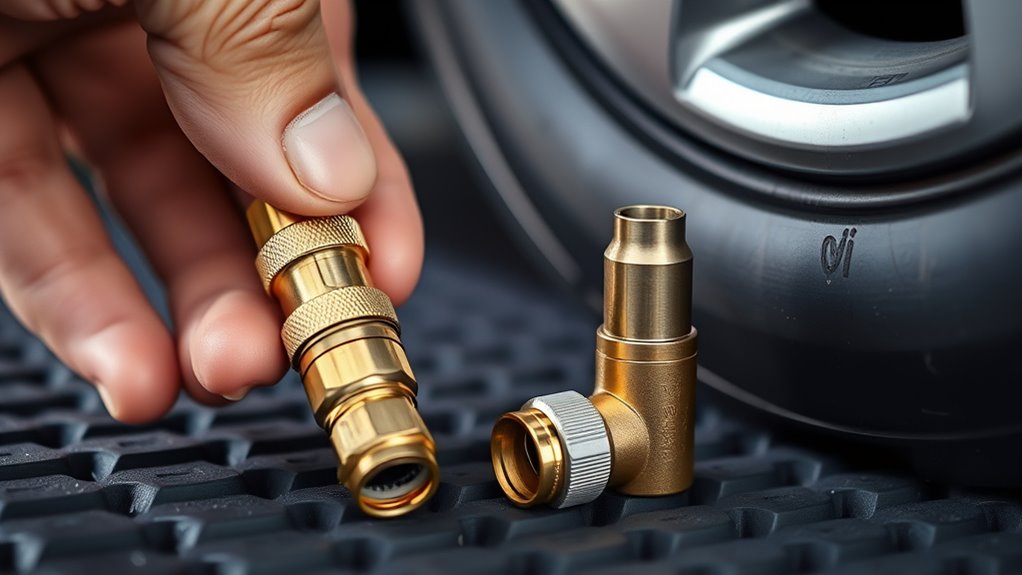
An air chuck is the mechanical fitting that connects to a tire valve stem and creates an airtight seal so you can inflate or maintain tire pressure. You use this air chuck as a tire inflation tool that depresses the valve core and lets compressed air move with control.
By attaching securely to tire valve stems, it supports accurate air pressure management and reduces air loss during service. You’ll find two main designs: open flow chucks and closed flow chucks. Open flow chucks let air pass without a valve stem connection, while closed flow chucks restrict airflow until you lock onto the valve.
You can pair either type with tire inflators, gauges, or air compressor hoses to keep pressure within specification. If you notice slipping grips, worn seals, or persistent leaks, replace the chuck promptly.
That keeps your system precise, dependable, and free from avoidable constraint.
How Open Flow Air Chucks Work
You’ll find that an open flow air chuck lets air move freely through the fitting with no internal check valve to restrict passage.
Because it doesn’t need valve-stem contact to pass air, you can use it for continuous flow testing and inflation. That makes it especially effective for tire inflators and other hand-operated air tools.
Free Air Passage
Open flow air chucks provide an unrestricted air path through the fitting, so air can move freely whether or not the chuck is attached to a valve stem.
You can use these open flow air chuck models with a tire pressure gauge, inflators, and an air hose without fighting internal check valves that restrict delivery. That design gives you direct control over flow, especially when you’re servicing a standard tire or filling a tankless 12-volt compressor system.
Because the passage stays open, you can connect, position, and start airflow with less interruption. Yet you must manage the stream carefully, since no built-in closure prevents loss.
In everyday tire service on passenger vehicles and light trucks, this free passage supports efficient, liberated operation when you want fast, precise inflation.
Works Without Valve Contact
Because there’s no internal check valve, an open flow air chuck starts moving air as soon as you connect it to an inflator or gauge, even if it isn’t pressed onto a tire valve stem. That direct Open Flow behavior gives you immediate control in tire inflation work.
- You can use it with hand-operated tools and inflator gauges.
- It supports continuous flow for accurate readings.
- It suits tankless 12-volt air compressors without rapid depletion.
- It works in vehicles, light trucks, and home workshops.
You’ll notice that this design reduces delay and simplifies operation.
If Air Chuck Leaking occurs, the issue usually comes from the connection, not the flow path. With fewer moving parts, you get a precise, liberated tool for controlled inflation.
Best For Inflators
An open-flow air chuck is built to pair naturally with tire inflators and gauges, since air passes through it without requiring valve-stem engagement. You get continuous flow, so you can monitor pressure while the gauge stays live.
These air chucks work best with tire inflators, especially tankless 12-volt compressors, where seamless inflation matters and depletion doesn’t. During hand-operated inflation, you can attach quickly to the valve stem and keep control without interrupting airflow. That improves efficiency and reduces setup friction.
Open flow also helps you read and adjust pressure in real time, which gives you more precise control. Don’t pair these air chucks with tanked compressors; they can drain stored air fast and waste energy.
How Closed Flow Air Chucks Work
Closed flow air chucks use an internal check valve to block airflow until you firmly seat the chuck on a tire valve stem, which lets you inflate with controlled, minimal air loss. You get precise tire inflation because the air chucks open only when contact compresses the seal.
That design matters when you run an air compressor with a tank, since it limits unnecessary depletion and keeps pressure available for the next task.
- Seal engages only when aligned
- Airflow starts on full contact
- Compressor output stays protected
- Inflation stays stable and repeatable
For direct hose-line use, you can attach the chuck, lock it, and deliver air without waste.
If you match the chuck to your air compressor type, you preserve efficiency and maintain control. This setup gives you practical autonomy: you decide when air moves, and your system responds with disciplined, reliable delivery.
Open Flow vs. Closed Flow Air Chucks
Open flow and closed flow air chucks do the same core job, but they control airflow in different ways, and that difference determines how you use them.
With open flow, air passes freely until you seat the chuck on the tire valve stem, so you can pair it with tire gauges and handheld inflators for quick, direct filling. That freedom works well with tankless 12-volt units, but it can drain a tanked air compressor fast if you don’t manage pressure control.
Closed flow air chucks use an internal check valve, so air stays blocked until the chuck locks onto the stem. That design gives you tighter control and better efficiency on air compressor hose lines.
If you want liberated, precise inflation, choose open flow for hand tools and closed flow for sustained hose use. Both air chucks fit compressor systems, but each one shapes how smoothly you regulate airflow.
Can You Use an Air Chuck With a Compressor?
Yes, you can use an air chuck with a compressor, but you need to match the chuck type to the job. When you connect the right air chuck, you control flow, protect your compressor, and speed tire service.
Open flow works for tire gauges and inflators because air moves freely; closed flow suits direct compressor use because its internal check valve blocks loss until the valve stem engages.
- Use open flow for hand-held inflation tools.
- Use closed flow to preserve tank pressure.
- Verify hose and chuck compatibility.
- Check PSI rating before you pressurize.
If you pair an open flow chuck with a tanked compressor, you’ll bleed air fast and waste capacity. A closed flow design keeps delivery disciplined and efficient.
Confirm the chuck seals cleanly on the tire valve, then inflate with purpose. That small technical choice gives you more control, less waste, and a freer workflow.
Common Air Chuck Styles
You’ll typically choose between straight and angled air chucks based on valve access and inflation setup. A straight chuck handles standard tire service well, while a 90-degree chuck improves reach on tight stems.
For larger or paired tire assemblies, you’ll use XL and dual-wheel styles to match the valve geometry and maintain a secure seal.
Straight And Angled Chucks
Straight and angled air chucks cover the most common tire inflation scenarios, with each style optimized for a specific valve-access challenge.
You choose the Straight Air Chuck for standard valves when you want efficient for using and a compact path to tire inflation. The 90-Degree Air Chuck reaches cramped stems on motorcycles or ATVs, so you can work without fighting clearance. A Locking Air Chuck gives you a secure fit and stable seal during pressure checks. The Dual-Wheel Air Chuck serves paired assemblies when access demands precision.
- Straight: simple, direct, rated to 150 PSI
- 90-degree: best for tight, recessed stems
- Locking: maintains seal under load
- Dual-wheel: supports tandem inflation workflows
You stay in control, reduce wasted motion, and keep inflation exact.
Dual-Wheel And XL Options
Dual-wheel air chucks handle dually trucks and tandem-axle trailers by letting you inflate paired tires efficiently without swapping attachments, while XL air chucks fit the large-bore valves used on heavy equipment for a secure, high-flow connection. You choose dual-wheel air chucks when access is tight; you choose XL air chucks when the valve stem demands more flow. Both use universal 1/4 NPT threads and durable materials for demanding service.
| Type | Use | Benefit |
|---|---|---|
| Dual-wheel | Paired tires | Efficient inflation |
| XL | Heavy equipment | Secure, rapid fill |
| Both | Air hoses | Easy compatibility |
A locking mechanism helps you hold pressure, reduce leakage, and stay in control. That means fewer interruptions and more liberated, precise tire service.
Signs Your Air Chuck Needs Replacement
A few clear warning signs indicate your air chuck needs replacement: persistent audible leaking usually points to a worn gasket or seal, reduced airflow can signal internal wear, and a slipping grip often means the steel locking jaws no longer hold the valve stem securely.
You should inspect your air chuck regularly so small defects don’t erode efficiency during tire inflation. Look for these signs:
- Audible hiss at the valve interface
- Slower fill rates than normal
- Distorted collar slider or actuator damage
- Difficulty securing the chuck on stems
These failures affect connection types by weakening retention and air transfer. If the chuck won’t seat firmly, or if wear becomes visible, replacement is the rational choice.
When retention weakens or wear appears, replacing the chuck is the practical choice for reliable air transfer.
Don’t wait for total failure; degraded parts waste time and pressure, and they can compromise safety. A sound air chuck preserves control, supports precise tire inflation, and keeps your system ready for direct, independent use.
How to Choose the Right Air Chuck
To choose the right air chuck, match the chuck type to the job: use an open-flow air chuck for tire inflators and gauges, and a closed-flow chuck for direct air compressor use so you don’t lose air too quickly.
Verify compatibility with your compressor; tanked systems pair best with closed-flow models.
Then evaluate design: a straight air chuck fits open valve access, while a 90-degree design gives you control in tight wheel wells and hard-to-reach stems.
Check the PSI rating before you buy; your chuck should meet or exceed the pressure your tires demand, and some models reach 150 PSI.
Open and Closed Flow matters because it controls delivery and retention.
Also inspect gaskets and seals during maintenance, since wear creates leaks and weakens performance.
When you choose with precision, you keep pressure, reduce waste, and stay in command of inflation.
Frequently Asked Questions
What Are the Different Types of Air Chucks?
You’ll find several Air Chuck Types: open-flow, closed-flow, straight, 90-degree, XL, and dual-wheel designs.
You choose based on Valve Compatibility, Inflation Speed, and Design Variations, since each chuck affects access and sealing.
You should check Material Durability and Pressure Accuracy to match your system.
For liberation from wasted air, use the right chuck and follow Maintenance Tips: inspect seals, clean debris, and replace worn parts promptly.
How to Use Tire Inflator Chuck?
Attach the tire inflator chuck firmly to the valve stem, and you’re off to the races.
Use tire maintenance tips, follow inflator safety precautions, and check air pressure basics before you start.
Choose inflators wisely for seasonal tire care, emergency inflator uses, and portable inflator advantages.
Engage closed-flow chucks, leave open-flow chucks free, inflate to the rated PSI, then disconnect quickly and replace the cap to preserve your freedom.
What Is the Difference Between an Open Flow and Closed Flow Air Chuck?
An open flow chuck lets air pass freely, so you’ll get open flow advantages for handheld inflation, while a closed flow chuck blocks air until it’s sealed, giving you closed flow benefits on compressor lines.
You’ll avoid compatibility issues by matching pressure ratings, material choices, and tool type.
Follow maintenance tips, inspect seals, and use safety precautions, or you’ll waste air and risk accidental discharge when you need control.
What Are the Common Problems With Air Chucks?
Common air chuck problems include air chuck leaks from worn seals, chuck compatibility issues with valve stems, gauge accuracy problems, material durability concerns, and inflation speed variations from restricted flow.
You may also see valve stem damage when jaws grip poorly or you force a bad fit.
Inspect the chuck regularly, replace worn parts early, and follow maintenance tips to preserve seal integrity, maintain control, and prevent waste during inflation.
Conclusion
When you match the right air chuck to your setup, you get cleaner fills, less leakage, and better control. Open flow and closed flow designs work differently, but each does its job when you use it correctly. If your chuck slips, hisses, or won’t seal, replace it before it wastes time and air. Choose the connection that fits your compressor and valve, and you’ll notice the difference exactly when tire pressure matters most.
