
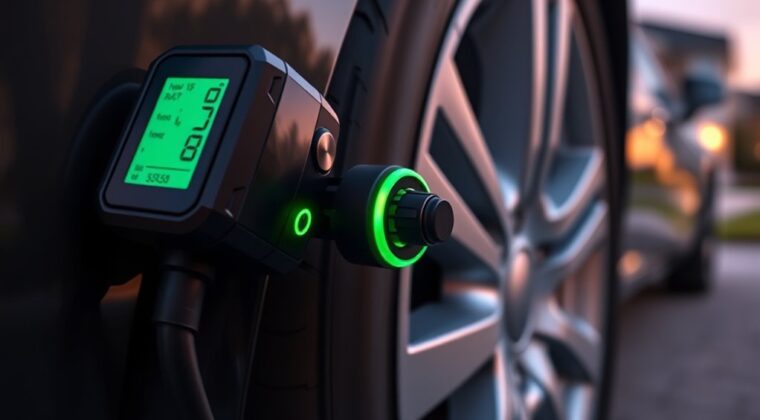
A tire inflator with auto shutoff stops automatically when you reach your preset PSI, so you can inflate tires accurately without watching the gauge constantly. You reduce overinflation, protect sidewalls, lower blowout risk, and keep pressure at the vehicle’s recommended level. It also saves time, cuts manual error, and makes routine maintenance easier. With a digital gauge and secure valve connection, you get controlled results—and there’s more to know about using it safely and effectively.
Key Takeaways
- Auto shutoff stops inflation at a preset PSI, so you do not need to monitor the tire constantly.
- It prevents overinflation, helping protect tire sidewalls and reducing blowout risk.
- Digital gauges show live pressure for accurate, controlled inflation.
- It saves time and effort by making tire maintenance easier and more efficient.
- Use the correct PSI, secure the chuck, and inspect hoses for safe operation.
What Does Auto Shutoff Do?
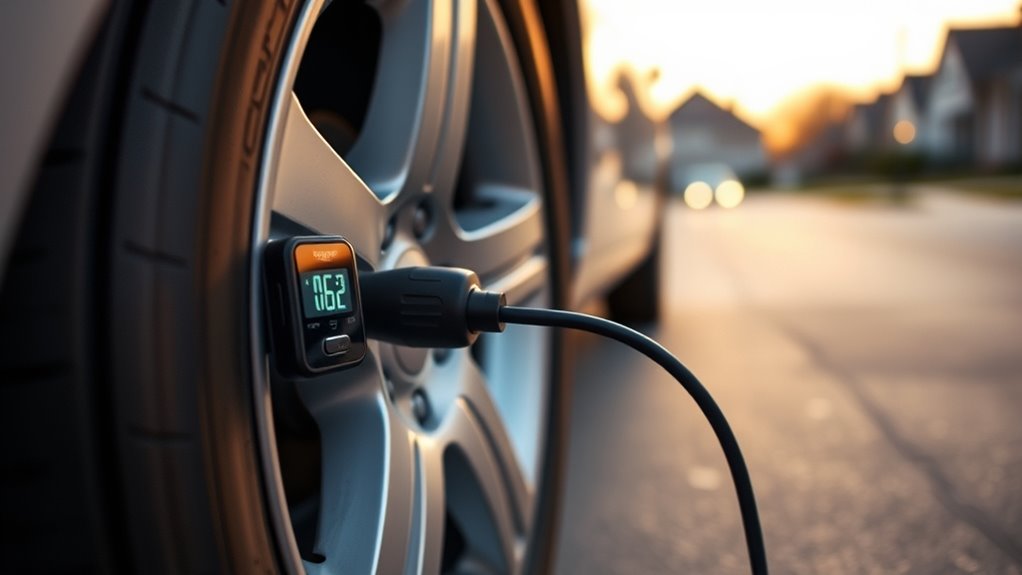
Auto shutoff in a tire inflator stops inflation automatically once the preset PSI is reached, so you can fill a tire to the correct pressure without constantly watching it. You set the target, connect the chuck, and let the device work.
The Auto Shut-off function cuts power at the chosen value, which gives you a controlled, repeatable result every time. A Digital Gauge shows the live pressure, so you can verify the reading before and during inflation.
Auto shut-off delivers controlled, repeatable inflation, while the digital gauge keeps pressure readings clear and easy to verify.
That combination makes the process straightforward and reliable, especially when you’re managing your own maintenance and want fewer interruptions. Instead of standing beside the tire, you can move on with your day while the inflator handles the task.
On many modern units, including compact cordless models, this feature streamlines routine care and supports precise pressure control. You get speed, accuracy, and a cleaner workflow without surrendering control or wasting time.
Why Auto Shutoff Prevents Overinflation
By stopping the compressor the moment the preset PSI is reached, auto shutoff keeps you from pushing air past the safe limit and overinflating the tire.
On a standard tire inflator, Automatic Shutoff acts as a pressure boundary: you set the target, and the unit cuts power when it gets there. That prevents the extra air that can stretch the sidewall, reduce tread contact, and shorten tire life.
You also lower the chance of a blowout, which is a direct safety gain. Because pressure stays where the vehicle maker intended, rolling resistance stays controlled, so you keep fuel use and handling in check.
A precision inflator, such as a model with dialed-in PSI engagement, lets you maintain freedom from constant monitoring without sacrificing control. You’re not chained to the gauge; the device enforces the limit for you, cleanly and reliably.
How Auto Shutoff Makes Tire Inflation Easier
When you use an auto shutoff tire inflator, the process becomes much more hands-off because the unit stops automatically at your preset PSI. This means you don’t have to babysit the gauge or keep checking pressure manually. That means your tire inflators do the monitoring work while you handle other tasks.
- Set the target PSI once.
- Let the compressor fill the tire.
- Rely on the digital gauge for accuracy.
- Move on without guesswork.
This automation saves time, reduces effort, and helps you keep tire pressure in range without constant supervision.
With auto shutoff, you avoid the repetitive stop-start routine that slows down manual inflation. You also reduce the risk of errors that come from watching a gauge under pressure.
Auto shutoff eliminates the stop-start hassle and helps reduce gauge-reading errors during inflation.
For you, that means less friction, more control, and a cleaner maintenance workflow. When your equipment works for you, tire care feels faster, simpler, and far less restrictive.
Best Tire Inflators With Auto Shutoff
A reliable auto shutoff inflator takes the guesswork out of topping off tires, and several models stand out for different needs.
If you want a premium gauge-driven option, the RapidAir Automatic Shutoff Tire Inflator Gauge gives you precise control at $174.95.
For a compact air compressor, the ASPERX Electric Tire Inflator delivers up to 160 PSI and earns solid 4.1-star feedback from 84 reviews.
If portability matters, the GEYILO Tire Inflator costs $24.99, runs on battery power, and reaches 180 PSI with auto shutoff.
The ASPERX Cordless Tire Inflator, priced at $26.99, adds a digital gauge and a 4.7-star rating from 48 reviews.
You can also choose the Amener Tire Inflator at $29.99; it supports 180 PSI and includes auto shutoff for straightforward tire maintenance.
Pick the unit that matches your pressure range, mobility needs, and budget, then let the system stop inflation for you.
How to Use Auto Shutoff Safely
Before you start inflation, make sure the chuck is firmly seated on the tire valve so the auto shutoff can work accurately without leaks.
You’ll keep control by checking the gauge as the tire fills and stopping only when it matches your target, usually 30-35 PSI. Set the Shutoff pressure before you begin, then let the unit run without hovering over every second.
If your inflator uses a Compressor Manifold, confirm every connection is tight and leak-free.
Use this quick routine:
Verify the valve seal, watch the gauge, confirm the preset, and unplug the inflator after use.
- Verify valve seal before power-up.
- Watch the pressure gauge during inflation.
- Confirm the preset matches your vehicle spec.
- Unplug the inflator after use.
Inspect the hose, fittings, and trigger points regularly so wear doesn’t defeat the automatic cut-off.
When you treat the tool as a precise release device, you protect your tires, your time, and your freedom to move without worry.
Frequently Asked Questions
What Are the Benefits of Using an Auto Air Tire Inflator?
You get faster, more accurate inflation with less effort, which keeps your tires at the right PSI and supports tire maintenance.
The auto shutoff stops inflation at your target pressure, so you avoid overfilling and reduce wear.
Digital gauges improve precision, while safety features like LED lights help in low light.
You can multitask confidently, cut human error, improve fuel efficiency, and extend tire life without being tied down.
Do Tire Air Pumps Turn off Automatically?
Yes, many tire air pumps turn off automatically, like a gate closing at the exact mark.
You can use tire inflator features such as preset PSI and automatic shutoff to stop inflation at your target pressure.
That gives you automatic shutoff benefits: less monitoring, lower over-inflation risk, and better tire accuracy.
You stay in control, save time, and avoid dependence on guesswork, which lets you maintain your vehicle with precision and freedom.
Are Automatic Tire Deflators Worth It?
Yes, they’re worth it if you value speed, consistency, and control.
You can set a target PSI, then let automatic tire deflators stop airflow precisely, which supports automatic tire maintenance and improves tire pressure safety.
You’ll save time on every setup, keep all tires matched, and reduce guesswork before off-road runs.
If you adjust pressures often, the efficiency and repeatability usually justify the cost.
What Are the Common Problems With Car Tire Inflators?
You’ll often face overinflation, inaccurate pressure readings, weak battery life, leaky valve connections, and missing gauges.
These inflate errors create inflator safety concerns and can damage tires fast.
For practical tire maintenance tips, you should verify calibration, monitor pressure with an external gauge, and inspect valve adapters before use.
If you’re cordless, charge fully and stop at the target PSI so you keep control and avoid needless dependence.
Conclusion
Auto shutoff takes the guesswork out of tire inflation by stopping the pump once you reach your preset pressure. That helps you avoid overinflation, improves safety, and saves time during routine maintenance. When you use a reliable inflator correctly, you keep your tires in the ideal range with less effort. Think of it as a pressure gatekeeper, quietly doing its job so you can stay focused on the road ahead and drive with confidence.
