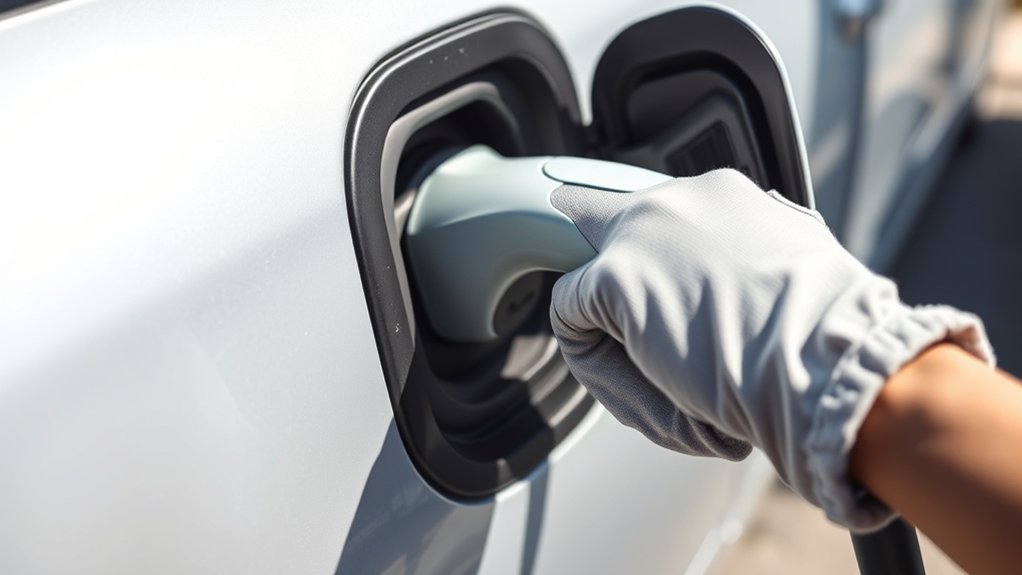
Caring for your EV charging port cap and door helps the connector seat correctly, keeps moisture and grit away from the inlet, and reduces the chance of failed charging sessions. You do not need special equipment for basic care. A soft cloth, mild cleaner, good lighting, and a careful inspection routine are enough for most owners.
Quick Answer
To care for an EV charging port cap and door, stop charging, unplug the vehicle, wipe the exterior door and surrounding area with a damp microfiber cloth, remove loose dust with a soft brush, inspect the seals and latch, let the area dry, and close the door firmly after every charge.
Key Takeaways
- Clean only when the vehicle is unplugged and charging has stopped.
- Use a microfiber cloth, soft brush, and mild pH-neutral car wash soap on exterior surfaces.
- Do not pour alcohol, spray WD-40, add grease, or scrape the inlet with metal tools.
- Check the cap, hinge, latch, rubber seals, and connector fit at least once a month.
- Call a technician if you see corrosion, heat damage, melted plastic, sparks, charging errors, or a loose connector.
At a Glance
| Time Required | 5 to 10 minutes for basic cleaning and inspection |
| Difficulty | Easy, as long as you avoid pins, liquid pooling, and force |
| Tools Needed | Microfiber cloth, soft detailing brush, mild pH-neutral car wash soap, clean water, flashlight, dry towel |
| Cost | Usually $0 to $15 if you already have basic car-cleaning supplies |
Why Regular Maintenance of Your EV Charging Port Is Crucial
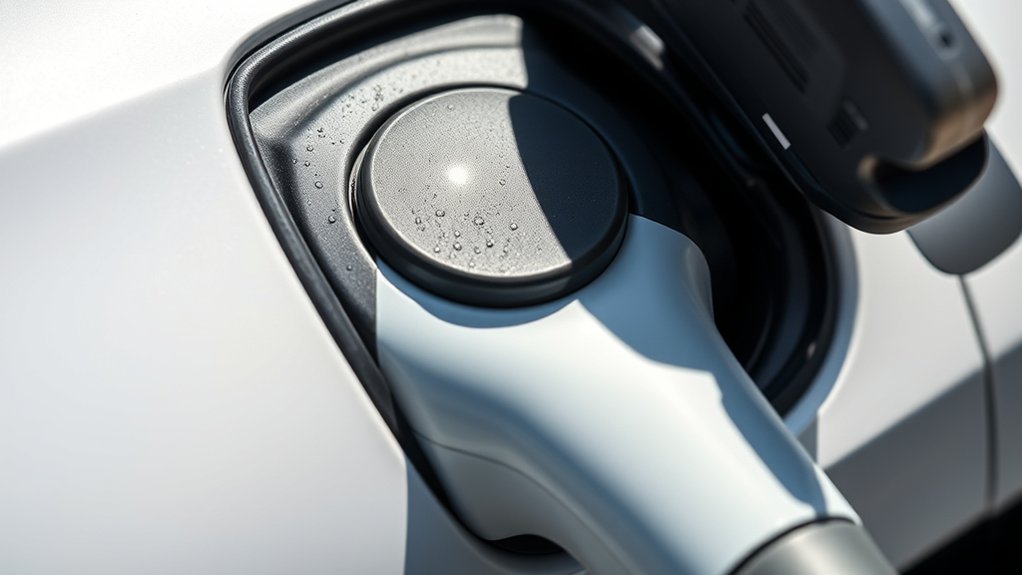
Your EV charging port, also called the vehicle inlet, needs a clean and secure connection every time you plug in. Dust, sand, road salt, moisture, and a misaligned door can keep the connector from seating fully. That can lead to slow starts, charging errors, latch problems, or interrupted sessions.
The U.S. Department of Energy Alternative Fuels Data Center explains that EV charging systems use different connectors, including J1772, CCS, CHAdeMO, and J3400/NACS. No matter which style your vehicle uses, the inlet area should stay clean, dry, and protected when not in use.
Good port care does not mean deep cleaning the electrical sockets. It means keeping the door, cap, hinge, seal, and surrounding painted area clean so contaminants do not get pushed into the inlet when you connect the cable.
Warning: Never clean the charging port while the vehicle is plugged in or actively charging. Do not pour liquid into the inlet, spray cleaners into the sockets, scrape contacts with metal tools, or add grease unless your owner’s manual or an EV technician specifically tells you to.
Essential Tools for Cleaning Your EV Charging Port
You only need gentle tools for routine EV charging port care. The goal is to remove dirt from the door, cap, and seal area without forcing debris deeper into the inlet.
- Microfiber cloth: Best for wiping the painted door, cap, and surrounding body panel without scratching.
- Soft detailing brush: Useful for dry dust around the hinge, weather seal, and door edges.
- Mild pH-neutral car wash soap: Safe for most exterior surfaces when diluted with water and applied to a cloth, not sprayed into the inlet.
- Flashlight: Helps you see cracks, seal damage, dirt buildup, or bent-looking contact areas.
- Dry towel: Helps remove moisture before you close the door.
- Foam swab: Use only for light residue on accessible non-damaged surfaces, and only if your owner’s manual does not prohibit it.
What Not to Use on an EV Charging Port
- WD-40 or oily sprays: They can leave residue and attract dust.
- Dielectric grease: Do not apply it to the inlet unless your owner’s manual or technician recommends it for your exact vehicle.
- Metal picks, screwdrivers, or knives: They can damage seals, plastic guides, or contact surfaces.
- Pressure washer spray: Avoid blasting water directly at the door gap or inlet.
- Harsh degreasers or abrasive pads: They can damage seals, trim, and painted surfaces.
How to Clean Your EV Charging Port in Simple Steps
Follow this safe cleaning sequence when the vehicle is parked, unplugged, and not charging.
| Step | What to Do | Why It Matters |
|---|---|---|
| 1. Stop and unplug | End the charging session, remove the connector, and let the port area sit for a moment. | You should never clean around an active charging connection. |
| 2. Check the door and cap | Open the door fully and inspect the hinge, latch, cap, and seal. | A cracked cap or weak seal can let dirt and moisture reach the inlet. |
| 3. Wipe exterior surfaces | Use a damp microfiber cloth with mild pH-neutral soap on the door, cap, and surrounding panel. | This removes grime before it gets pushed into the port area. |
| 4. Brush loose dust | Use a soft detailing brush around the hinge, door edge, and rubber seal. | Dry dust is easier to remove before it mixes with moisture. |
| 5. Inspect the inlet | Look for obvious debris, corrosion, bent-looking plastic guides, melted areas, or discoloration. | Visible damage should be checked by a technician before you keep charging. |
| 6. Dry the area | Pat the door, seal, and cap dry. If needed, use only gentle air from a distance. | A dry seal and door reduce the chance of trapped moisture. |
| 7. Close it firmly | Make sure the charge door or cap closes flush and does not pop back open. | A secure door protects the inlet between charging sessions. |
Pro Tip: Clean the door and cap before a public charging trip if your car has been through mud, road salt, sand, or a dusty parking area. A quick wipe can prevent grit from being pushed into the connector path.
Top Mistakes to Avoid in EV Charging Port Care
Most charging port problems come from force, moisture, dirt, or the wrong cleaner. Avoid these common mistakes:
- Cleaning while plugged in: Always stop charging and remove the connector first.
- Forcing a connector: If the plug does not seat smoothly, stop and inspect the inlet, cable, and adapter.
- Leaving the door open: An open door invites rain, pollen, sand, and insects into the port area.
- Using oily sprays: Products like WD-40 are not routine charging-port cleaners.
- Adding grease: Do not add dielectric grease unless your owner’s manual or technician tells you to.
- Pressure washing the inlet: Keep high-pressure water away from the charge door gap and socket area.
- Ignoring seal damage: A worn rubber seal can let moisture and debris reach sensitive areas.
How to Inspect Your EV Charging Port for Damage
A quick inspection helps you catch small problems before they become charging failures. Use a flashlight and look closely, but do not poke deep into the inlet.
| Area to Check | What to Look For | What to Do |
|---|---|---|
| Charge door | Cracks, loose fit, sticking, or not sitting flush | Clean the hinge area. If it still will not close, schedule service. |
| Cap or cover | Broken tether, missing cap, loose cover, or warped plastic | Replace damaged caps with the correct part for your vehicle. |
| Rubber seals | Cuts, flattening, hard spots, or gaps | Have worn seals checked so moisture does not enter the port area. |
| Inlet face | Sand, leaves, insects, corrosion, discoloration, or melted plastic | Remove loose surface debris only. Get service for corrosion, heat marks, or melted areas. |
| Connector fit | Loose latch, resistance, repeated errors, or plug not locking | Try another known-good charger. If the issue repeats, call a technician. |
Seasonal Care for Rain, Snow, Salt, and Dust
Your charging port door faces different problems depending on where you drive and park.
Rain and Car Washes
Most modern EV charging systems are designed with safety controls, and connectors such as SAE J1772 include signaling and safety features. Still, you should keep the inlet area clean and avoid direct high-pressure spray. After washing the car, open the door, check for trapped water around the cap and seal, dry the area, and close it firmly.
Snow and Ice
Brush snow away before opening the charge door. If the door is frozen, do not pry it with a screwdriver. Use the vehicle’s defrost features if available, warm the area gently with your hand, or follow the owner’s manual. Forcing a frozen door can break the hinge or latch.
Road Salt and Coastal Air
Salt can build up around the door edge and rubber seal. Wipe the exterior area more often in winter or near the coast. If you see green, white, or rusty-looking corrosion inside the inlet, stop DIY cleaning and have the port inspected.
Dust, Sand, and Pollen
Dusty areas can leave grit around the cap and connector path. Use a dry soft brush first, then wipe exterior surfaces with a damp microfiber cloth. Do not turn sand into paste by soaking the inlet area.
Connector Types and Port Door Differences
Your exact charging port design depends on your vehicle and connector type. The care routine is similar, but the shape and door mechanism can vary.
- J1772: Common for Level 1 and Level 2 AC charging on many North American EVs and plug-in hybrids.
- CCS: Adds DC fast-charging pins below the J1772-style section, so the lower cover and cap area need extra attention.
- J3400/NACS: The connector based on Tesla’s North American design is now part of the SAE J3400 standard and is being adopted by more North American EVs.
- Adapters: Use only automaker-approved adapters. Keep adapter contacts clean and dry, and do not use extension cords or add-on devices unless the vehicle maker and charging network allow them.
Note: If one public charger will not start, the problem may be the station, connector, app, payment system, or network. Try another stall or charger before assuming your vehicle port is damaged.
Preventive Care Tips for Long-Term Maintenance of Your Charging Port
A simple routine keeps your EV charging port door and cap in good condition.
- After every charge: Remove the connector straight, check that the cap is seated, and close the door fully.
- Weekly: Wipe the door edge and surrounding paint if you drive through dust, mud, or salt.
- Monthly: Inspect the seal, hinge, latch, cap tether, and inlet face with a flashlight.
- After car washes: Dry around the door and confirm it closes flush.
- Before road trips: Test your home charger or a known-good charger so you are not troubleshooting for the first time on the road.
- Once a year: Ask for a charging-port inspection during routine EV service, especially if you use public fast chargers often.
When to Call in the Pros for Your Charging Port
Some charging port problems are not safe DIY jobs. If cleaning and careful inspection do not solve the issue, let a qualified EV technician check the inlet, latch, charge door, and related electronics.
Signs of Damage
Call for service if you notice any of these warning signs:
- Visible cracks on the charging port cap, door, hinge, or inlet face
- Missing or damaged rubber seals
- Corrosion, green residue, white powder, or rusty staining inside the inlet
- Melted plastic, burn marks, or a hot smell after charging
- Sparks, popping sounds, or repeated charger faults
- A connector that will not latch, unlock, or release normally
Persistent Charging Issues
One failed charge does not always mean the vehicle port is bad. Try a different cable, charger, or public station if it is safe to do so. If the same error follows your vehicle, the port or charge-control system may need diagnostics.
| Sign of Trouble | Best Next Step |
|---|---|
| Corrosion or residue inside the inlet | Stop DIY cleaning and schedule service. |
| Unusual heat, smell, sparks, or popping sounds | Stop using that port and get immediate help. |
| Connector feels loose or will not lock | Try a known-good charger, then schedule inspection if it repeats. |
| Repeated charging error messages | Record the error and ask a technician to scan the vehicle. |
| Door will not close flush | Clean the hinge area, then service the latch if it still sticks. |
Regular Maintenance Checks
Regular checks are most useful when your EV lives outdoors, uses public chargers often, or drives in harsh weather. A quick monthly inspection can spot a damaged cap, worn seal, or sticky door before it turns into a charging failure.
If your vehicle is still under warranty, avoid home repairs that could damage the inlet or affect coverage. Document repeated charging errors, take a clear photo of visible damage, and contact your dealer or EV service center.
Frequently Asked Questions
Can I put rubbing alcohol in my charging port to clean it?
Do not pour rubbing alcohol into your EV charging port. If your owner’s manual allows light contact cleaning, use only a small amount of isopropyl alcohol on a foam swab, keep it away from deep sockets, and let the area dry fully before charging. If you see corrosion or damage, call a technician instead.
How do I open a charging port door?
It depends on the vehicle. Some doors open by pressing the flap, some use a button near the driver’s seat, and some open from the touchscreen, key fob, or app. If the door does not open, check that the vehicle is unlocked and read the owner’s manual before forcing it.
What is the 80/20 rule for EV charging?
The common 80/20 rule means many EV owners keep the battery between about 20% and 80% for daily driving when they do not need full range. It is battery-care guidance, not a charging-port cleaning rule. Follow your vehicle manual because some battery chemistries and models have different charging recommendations.
Can I use WD-40 to clean my charging port?
No. Do not use WD-40 as a routine EV charging port cleaner. It can leave residue and attract dust. Use a microfiber cloth and mild cleaner on exterior surfaces only. For internal corrosion, damaged contacts, or charging errors, get professional service.
Is it safe to charge an EV in the rain?
Modern EV charging systems are designed with safety controls, but you should still keep the connector and port area clean, avoid standing water when possible, and never use a damaged cable or visibly damaged port. If the connector does not seat smoothly, stop and inspect it.
How often should I clean my EV charging port door?
For normal driving, inspect it monthly and wipe the door area whenever it looks dirty. Clean it sooner after road salt, mud, dust, pollen, car washes, beach trips, or winter storms. The inlet itself should only need gentle inspection unless your manual gives specific cleaning instructions.
Conclusion
Your EV charging port cap and door do not need heavy cleaning. They need gentle, consistent care. Keep the door area clean, close the cap after each charge, inspect the seals, and avoid sprays, grease, pressure washing, and metal tools. If you see corrosion, heat damage, sparks, or repeated charging errors, stop guessing and get the port checked by a qualified EV technician.
Sources
- U.S. Department of Energy Alternative Fuels Data Center: Electric Vehicle Charging Stations — backs connector types, charging equipment terminology, CCS, and J3400/NACS context.
- SAE International: J1772 Conductive Charge Coupler — backs J1772 connector and safety-signal context.
- SAE International: J3400 North American Charging System — backs current NACS/J3400 terminology.
- ENERGY STAR: Electric Vehicle Chargers — backs certified EV charging equipment reference.
- Reliability of Open Public Electric Vehicle Direct Current Fast Chargers — backs the point that broken connectors and charge-initiation failures can affect charging reliability.