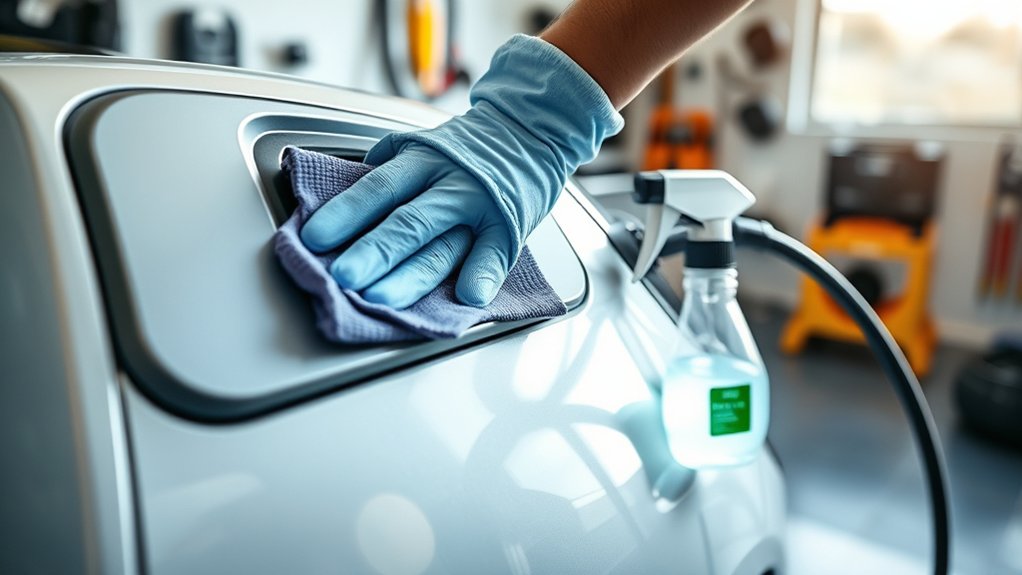
Cleaning your EV charger is mostly about removing dust, grime, pollen, spider webs, and road film without pushing moisture into electrical parts. The safest method is simple: stop the charging session, disconnect the vehicle, de-energize the charger if you control the power source, then wipe only the exterior with a barely damp, non-abrasive cloth. Never spray liquid directly on the charger, handle, connector, pins, or vehicle charge port.
Quick Answer
To clean an EV charger without damage, stop charging, unplug the connector from the vehicle, and turn off power at the breaker for a hardwired unit or unplug a portable charger. Wipe the exterior, cable, and holster with a barely damp microfiber cloth and mild soap solution, then dry everything fully before use.
Key Takeaways
- Clean only the exterior surfaces unless your charger manual gives specific instructions for deeper maintenance.
- Use a soft cloth, mild soap, and very little moisture. Never spray cleaner directly on the charger or connector.
- Do not use WD-40, bleach, abrasive pads, polish, pressure washers, or alcohol inside a connector or vehicle charge port.
- Stop using the charger if you see cracks, frayed cable insulation, corrosion, overheating, burning smells, or repeated fault lights.
At a Glance
| Time Required | 10 to 15 minutes for routine exterior cleaning |
| Difficulty | Easy, as long as you do not open the charger or clean live electrical parts |
| Tools Needed | Microfiber cloths, mild dish soap, clean water, dry towel, soft detailing brush, and protective gloves if desired |
| Cost | Usually $0 to $10 if you already have basic cleaning supplies |
Safety First: Preparing Your EV Charger for Cleaning
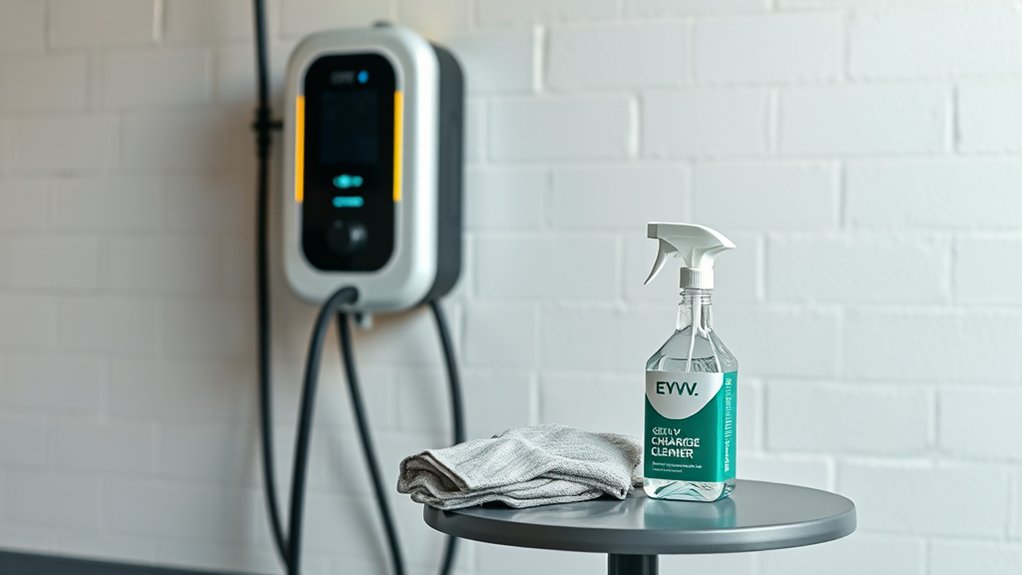
Before you clean your EV charger, make sure it is not actively charging. Stop the charging session, unlock the connector if needed, remove the connector from the vehicle, and place the handle in its dock.
If you have a hardwired wall charger, turn off power at the circuit breaker before cleaning if you can safely identify the correct breaker. Tesla’s Wall Connector manual, for example, warns users to turn off power at the circuit breaker before cleaning and to avoid spraying liquid directly on the unit or charge handle. You can review the official Tesla Gen 3 Wall Connector Manual for an example of manufacturer safety guidance.
If you use a portable plug-in EVSE, stop the session, unplug it from the vehicle, then unplug it from the wall outlet if your manual allows routine exterior cleaning while disconnected. If the plug, outlet, or cable feels hot, smells burned, or looks damaged, do not clean and reuse it. Have it inspected first.
If you are cleaning around a public or commercial charger, do not open the cabinet, remove covers, touch terminals, or try to reset internal components. Report damage, moisture intrusion, exposed wiring, or broken connectors to the site owner or network operator.
Warning: Never spray water, hose down, pressure wash, submerge, or pour cleaner onto an EV charger, cable, connector, or vehicle charge port. Do not touch connector pins with your fingers, tools, wire, needles, or cotton swabs.
What You Need Before Cleaning an EV Charger
For routine cleaning, keep the supplies simple. The goal is to remove dirt from exterior surfaces without scratching plastic, damaging labels, or forcing liquid into seals and electrical parts.
- Microfiber cloths: Use one barely damp cloth for cleaning and one dry cloth for finishing.
- Mild soap solution: Mix a few drops of mild dish soap into clean water. The cloth should be damp, not dripping.
- Soft detailing brush: Use it dry for dust around seams, wall brackets, cable hooks, and holsters.
- Clean dry towel: Use it to dry the charger body, cable, handle, and holster before turning power back on.
- Manufacturer manual: Follow your charger’s manual first, because finishes, screens, seals, and connector designs vary.
Recommended Cleaning Solutions for EV Chargers
The safest cleaning solution for most EV charger exteriors is a mild soap-and-water mix applied to a cloth, not sprayed on the charger. If your charger has a screen, RFID reader, rubber gasket, stainless trim, or painted housing, check the manual before using any wipe, polish, or disinfectant.
| Cleaning Option | Best For | Safe Use Notes |
|---|---|---|
| Diluted mild dish soap | Exterior plastic or painted housing | Apply with a barely damp cloth only. Dry right away. |
| Clean water on a microfiber cloth | Dust, pollen, fingerprints, and light surface grime | Wring out the cloth until it cannot drip. |
| Manufacturer-approved exterior wipes | Public-facing handles, housings, or touch areas | Use only if the charger maker allows them. Keep wipes away from connector pins and ports. |
| Dry soft brush | Dust around seams, holster edges, cable hooks, and wall brackets | Use light pressure. Do not push bristles into terminals or connector openings. |
Avoid harsh chemicals, solvents, bleach, abrasive powders, scouring pads, metal tools, petroleum-based sprays, and surface polish unless your charger manufacturer specifically approves them. These products can damage plastics, seals, labels, displays, or protective coatings.
Step-by-Step Guide to Cleaning EV Charger Surfaces
Follow this sequence every time you clean your EV charger. It keeps moisture controlled and helps you spot problems before they turn into charging failures.
1. Stop Charging and Disconnect Safely
End the charging session before touching the charger. Remove the connector from the vehicle and place it in the dock. For a hardwired charger, turn off the correct breaker if you control it and can do so safely. For a portable charger, unplug it from the outlet after stopping the session.
2. Inspect Before You Wipe
Look over the charger housing, cable, handle, holster, wall bracket, plug, and nearby outlet. Check for cracks, melted plastic, loose mounting, frayed insulation, corrosion, insect nests, water pooling, or a burning smell. If you see any of these, stop and call a qualified electrician or the charger manufacturer.
3. Wipe the Exterior Housing
Dip a microfiber cloth into mild soapy water, then wring it out until it is only slightly damp. Wipe the outside of the charger in light passes. Do not let liquid run into seams, buttons, screens, vents, cable entry points, or the charging handle.
4. Clean the Cable and Holster
Wipe the cable from the charger outward using the same barely damp cloth. Support the cable as you clean so you are not pulling on the unit or wall bracket. Clean the holster and cable hook with light pressure, then dry them fully.
5. Clean Around the Connector, Not Inside It
Use a dry cloth or soft dry brush to remove dust from the outside of the connector handle. Do not put cloth corners, cotton swabs, liquid, WD-40, alcohol, or tools inside the connector face or the vehicle charge port. If debris is stuck inside, check your vehicle and charger manuals or contact service support.
6. Dry Everything Before Powering Back On
Use a clean dry cloth to remove moisture from the housing, cable, handle, and holster. Wait until every surface is dry before restoring power or plugging the charger back in. After power is restored, confirm the charger shows its normal ready light before starting a charging session.
Pro Tip: Clean the cable while it is loosely supported in one hand. This helps you feel cuts, soft spots, swelling, or stiff sections that may be hard to see.
Top Tips to Prevent Damage While Cleaning Your EV Charger
Most EV charger cleaning damage comes from too much liquid, the wrong chemical, or aggressive scrubbing. Use the table below as a quick safety check.
| Precaution | What to Do | Why It Matters |
|---|---|---|
| De-energize first | Stop charging and disconnect power according to charger type. | Reduces shock risk and prevents accidental charging during cleaning. |
| Control moisture | Use a barely damp cloth, never a spray bottle or hose. | Moisture inside the unit can damage electrical parts and seals. |
| Avoid harsh chemicals | Skip bleach, solvents, degreasers, WD-40, polish, and abrasive cleaners. | These can weaken plastic, cloud screens, harm seals, or leave residue. |
| Do not open the charger | Clean only visible exterior surfaces. | Internal service should be handled by qualified personnel. |
| Dry before reuse | Dry the housing, cable, connector handle, and holster fully. | A dry finish helps prevent corrosion, slipping, and moisture faults. |
Easy Ways to Keep Your EV Charger in Great Shape Post-Cleaning
Good maintenance is not just about wiping the charger once. The U.S. Department of Energy’s Alternative Fuels Data Center notes that EV charging infrastructure maintenance includes storing charging cables securely, checking parts periodically, and keeping equipment clean.
- After each use: Return the connector to its holster so the handle is not sitting on the ground.
- Weekly or monthly: Look for dirt buildup, loose cable loops, insects, moisture, and cracked plastic.
- After storms: Check outdoor chargers for standing water, mud splash, windblown debris, and damaged covers.
- After winter road salt exposure: Wipe the cable and handle exterior with a barely damp cloth, then dry fully.
- Twice a year: Review the manual, check mounting hardware visually, inspect the cable, and confirm the charger operates normally.
Note: Outdoor EV chargers are built for weather exposure only within their rated limits. Weather-resistant does not mean safe to hose down, pressure wash, or clean while energized.
How to Spot Problems in Your EV Charger?
Cleaning is a good time to inspect your EV charger. Do not ignore visual damage or performance changes. A charger can look dirty on the outside while also hiding a cable, connector, or mounting problem that needs service.
| Problem Sign | What It May Mean | What to Do |
|---|---|---|
| Cracked housing or handle | Impact damage or possible moisture path | Stop using it and contact the manufacturer or installer. |
| Frayed, cut, swollen, or stiff cable | Cable insulation damage or overheating | Do not charge until it is inspected or replaced. |
| Corrosion, green residue, or discoloration | Moisture exposure or contact wear | Do not scrape terminals. Get professional guidance. |
| Repeated fault lights or breaker trips | Electrical fault, ground fault, wiring issue, or charger problem | Stop using the charger and call a qualified electrician. |
| Burning smell or unusual heat | Possible overheating, loose connection, or damaged component | Turn off power if safe and get help immediately. |
Routine cleaning can keep dirt and moisture from building up, but it is not a repair method. If the charger looks damaged or behaves differently, stop using it until the problem is checked.
When to Call an Electrician or Manufacturer Support
Call a qualified electrician, certified installer, or the charger manufacturer if you notice anything beyond surface dirt. This includes exposed wiring, melted plastic, water inside the unit, repeated error lights, breaker trips, buzzing, heat, a loose wall mount, damaged cable insulation, or charging that starts and stops without a clear reason.
Do not open the charger cabinet unless you are trained and authorized to service that exact equipment. OSHA’s hazardous energy guidance explains why maintenance work around electrical energy needs proper control procedures. For home users, the practical rule is simple: clean the outside only and leave electrical repairs to qualified people.
EV Charger Maintenance and Care Checklist
Use this quick checklist after cleaning and during normal use:
- Confirm the charger body is dry before turning power back on.
- Keep the connector docked when it is not in use.
- Keep the cable loosely coiled or supported. Do not kink it, crush it, drag it, or drive over it.
- Keep leaves, mud, snow, insects, and stored items away from the charger.
- Check the status lights after cleaning to make sure the charger returns to normal standby mode.
- Review your manual for model-specific cleaning, storage, and operating-temperature limits.
For public charging sites, reliability and usability are active industry concerns. The ChargeX Consortium brought national labs, EV charging companies, and other stakeholders together to improve public charging reliability and user experience. For your own charger, the best habit is to keep the equipment clean, dry, supported, and inspected.
Frequently Asked Questions
How do you clean an EV charger?
Stop the charging session, disconnect the vehicle, and de-energize the charger according to its type. Wipe the exterior housing, cable, handle, and holster with a barely damp microfiber cloth and mild soap solution. Dry everything fully before restoring power or charging again.
How do I clean my charging port without damaging it?
For the vehicle charging port or the charger connector face, do not use liquid, metal tools, cotton swabs, WD-40, or alcohol. Remove only loose surface dust around the outside with a dry cloth or soft dry brush. If debris is inside the port or connector, follow the vehicle manual or contact service support.
Is it safe to put isopropyl alcohol in a charging port?
No. Do not put isopropyl alcohol into an EV charging port, charger connector, or pin area. Alcohol can leave moisture or residue in places you cannot dry properly, and it may affect plastics or seals. Use dry cleaning only around ports unless the manufacturer gives a specific approved method.
Can I use WD-40 to clean a charging port?
No. Do not use WD-40 in an EV charging port or connector. It can leave residue, attract dirt, and create problems on electrical contact surfaces. If the port or connector looks corroded, wet, or contaminated, stop using it and get manufacturer or professional service advice.
How often should I clean my EV charger?
For most home chargers, a light monthly wipe-down is enough. Clean sooner if the charger is outdoors, exposed to pollen, mud, road salt, insects, or heavy dust. Inspect the cable and connector each time you clean, and do a more careful visual check at least twice a year.
Can I pressure wash an outdoor EV charger?
No. Do not pressure wash an EV charger, even if it is rated for outdoor use. Pressure can force water past seals and into parts that should stay dry. Use a damp cloth on the exterior only, then dry the charger before returning it to service.
Conclusion
Cleaning your EV charger is a simple maintenance task, but it needs a careful approach. Stop charging, disconnect safely, keep moisture under control, wipe only the exterior, and dry the charger before use. Skip harsh chemicals, sprays, WD-40, alcohol inside ports, and pressure washing. If you see cracks, frayed cables, heat, corrosion, fault lights, or signs of water intrusion, do not try to clean the problem away. Stop using the charger and get qualified help.
Sources
- Tesla Gen 3 Wall Connector Manual — backs breaker shutoff before cleaning, no direct spraying, and damaged-equipment warnings.
- U.S. Department of Energy AFDC: Operation and Maintenance for EV Charging Infrastructure — backs cable storage, periodic checks, and keeping charging equipment clean.
- U.S. Department of Energy AFDC: Electric Vehicle Charging Stations — backs EV charging terminology, including charging ports, EVSE ports, and connectors.
- OSHA: Control of Hazardous Energy — backs the general importance of controlling electrical energy during maintenance work.
- Idaho National Laboratory: ChargeX Consortium — backs current EV charging reliability and usability context.