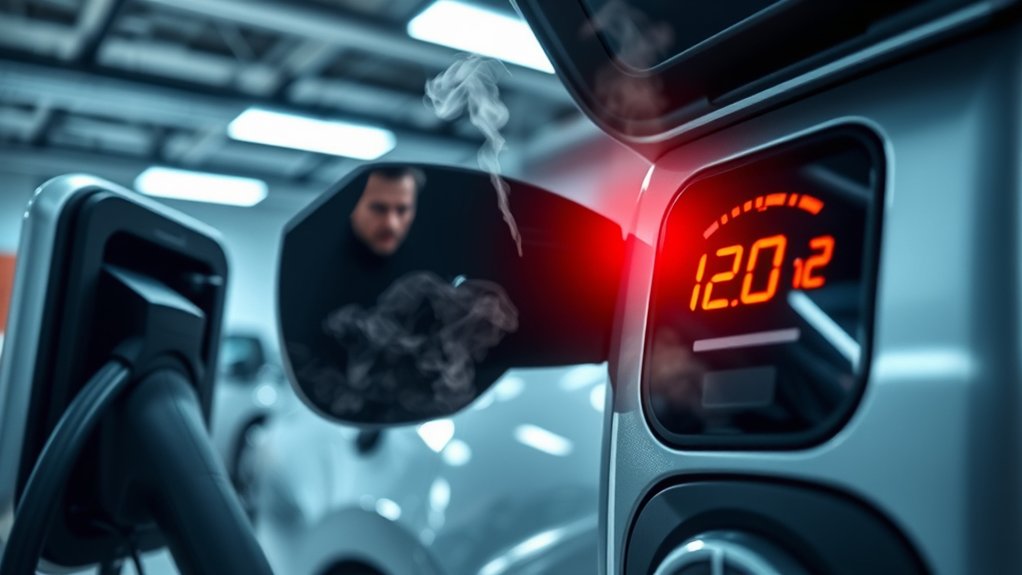
Your EV charger overheating is usually a sign of heat building up somewhere in the charging setup. Common causes include a hot garage, direct sun, poor ventilation, a loose plug, a worn outlet, damaged cable, unsupported adapter, or a circuit that is not sized correctly for the charger. A slightly warm handle can be normal during charging, but a plug, outlet, cable, or charger body that feels too hot to touch needs attention right away.
Quick Answer
If your EV charger is overheating, stop the charging session, unplug only if it is safe to touch, and turn off the breaker for that circuit. Do not use the charger again if you notice a burning smell, melted plastic, discoloration, repeated breaker trips, or a hot outlet. Call a qualified electrician before restarting.
Key Takeaways
- A warm charging handle can be normal, but a plug, outlet, breaker, or cable that is too hot to touch is not safe.
- Loose connections, worn receptacles, undersized wiring, unsupported adapters, and poor ventilation are the most common heat sources.
- Level 2 home charging should follow local code, permit rules, and the charger maker’s installation instructions.
- Use safety-certified EV charging equipment, and have a qualified electrician inspect any repeated overheating.
At a Glance
| Time Required | 5 minutes for a visual safety check; longer if an electrician needs to inspect the circuit. |
| Difficulty | Easy for basic inspection; professional for outlet, breaker, wiring, or charger repair. |
| Tools Needed | Your EV app, charger app, flashlight, owner’s manual, and a qualified electrician for electrical faults. |
| Cost | Free for basic checks; varies for outlet replacement, hardwiring, circuit repair, panel work, or charger replacement. |
Why Is My EV Charger Overheating?
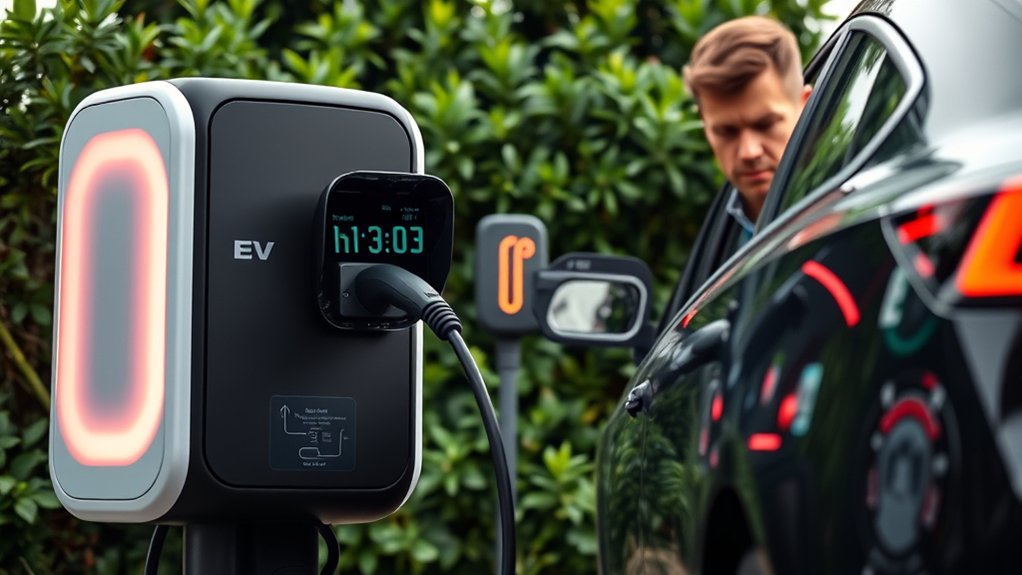
Your EV charger may overheat because the charger, plug, outlet, wiring, or vehicle charge port is carrying a high current for a long time. Home EV charging is treated as a continuous electrical load, so weak points in the circuit can get hot during a long session.
The most common causes are:
- Loose connections: A plug that does not seat firmly, a worn receptacle, or a loose terminal can raise resistance and create heat.
- Undersized or overloaded wiring: A circuit that is not sized for the charger’s current can run hot.
- High ambient temperature: A hot garage, direct sunlight, or poor airflow can push the charger closer to its operating limit.
- Coiled or covered cable: A tightly wrapped cable can trap heat instead of letting it dissipate.
- Damaged cable or connector: Cracks, corrosion, bent pins, frayed insulation, or melted plastic can make heat worse.
- Unsupported adapter or extension cord: Extra connection points can add resistance. Use only adapters or cordsets approved by your vehicle or charger manufacturer.
- Low-quality charging equipment: Non-certified products may not meet the same safety testing standards as certified EV chargers.
The U.S. Department of Energy’s Alternative Fuels Data Center notes that Level 2 home charging equipment must be installed according to local and state codes, and that EV charging infrastructure is considered a continuous load under the National Electrical Code. That is why proper circuit sizing and installation matter so much.
Warning: Stop charging immediately if you smell burning, see smoke, notice melted or discolored plastic, hear buzzing or crackling, feel a hot outlet, or see the breaker trip repeatedly. Do not restart charging until a qualified electrician checks the charger, outlet, breaker, and circuit.
How Hot Is Too Hot for an EV Charger?
A little warmth at the charging handle or cable can happen during normal use, especially on Level 2 charging. Unsafe heat feels different. If the connector, plug, outlet, cable, or charger body is too hot to hold comfortably, treat it as a warning sign.
Watch for these red flags:
- The wall plug or outlet is hotter than the cable.
- The charger handle feels hotter near the pins.
- The outlet faceplate is discolored, cracked, or warped.
- The plug sits loosely or falls out easily.
- The charger slows down, stops, or shows a temperature-related error.
- The breaker trips more than once during charging.
- You smell hot plastic, burning insulation, or ozone.
Heat at the outlet is especially serious on plug-in Level 2 chargers that use a NEMA receptacle. The receptacle is a connection point, and a worn or loose receptacle can heat under load. If this happens, stop using it and have it inspected.
How to Recognize EV Charger Overheating Signs
Recognizing EV charger overheating early can prevent damage to your charger, wiring, outlet, and vehicle charge port. Check the setup during the first 15 to 30 minutes of a charging session, then again later during long sessions.
| Sign | What It May Mean | What to Do |
|---|---|---|
| Hot plug or outlet | Loose receptacle, worn contacts, or overloaded circuit | Stop charging and call an electrician |
| Melted or brown plastic | Severe heat damage | Turn off the breaker and do not reuse |
| Burning smell | Overheated insulation, plug, outlet, or charger component | Stop charging immediately |
| Repeated breaker trips | Overload, fault, bad connection, or incompatible setup | Do not keep resetting it |
| Charging speed drops | Charger or vehicle may be limiting current because of heat | Check app errors and improve airflow |
What to Do Immediately if Your EV Charger Overheats
If your charger overheats, act calmly and avoid touching hot or damaged parts.
- Stop the charging session from the vehicle screen, EV app, or charger app if possible.
- Unplug only if it is safe. Do not grab a melted, smoking, or painfully hot plug.
- Turn off the breaker for the charging circuit. In some regions, this may be called the MCB.
- Keep people and flammable items away from the charger, outlet, and cable.
- Inspect visually for discoloration, melted plastic, loose outlet grip, cracked cable, bent pins, corrosion, or water entry.
- Do not restart charging until the cause is found.
- Call a qualified electrician if the outlet, breaker, wiring, or hardwired charger may be involved.
If you see smoke, flame, or active melting, leave the area and call emergency services. Do not spray water on energized electrical equipment.
How Ambient Temperature Affects Charging
Ambient temperature affects both charging performance and safety. A charger installed in a hot garage, against a sun-facing wall, or near poor airflow may run warmer than the same charger in a shaded, ventilated location.
Heat can build faster when:
- The garage is already hot before charging starts.
- The charger is in direct sunlight.
- The charging cable is tightly coiled.
- The charger is covered, boxed in, or installed too close to heat-producing equipment.
- The vehicle is charging at a high current for several hours.
- The circuit has a weak connection or excessive voltage drop.
Outdoor charging can be safe when the equipment is rated for outdoor use. The AFDC notes that outdoor home charging installations require outdoor-rated equipment. Always follow the charger’s installation manual for temperature range, mounting clearance, enclosure rating, and weather protection.
Pro Tip: During extreme heat, schedule charging overnight and lower the charge current in your vehicle or charger app if your setup allows it. This can reduce heat, but it is not a fix for a damaged outlet, loose connection, or undersized circuit.
How Loose Connections Lead to Overheating
Loose connections are one of the biggest EV charger overheating risks because they create electrical resistance. More resistance means more heat at the weak point. That weak point may be inside the outlet, at the plug blades, in a terminal, at the breaker, inside a junction box, or at the charger connection.
Common signs of a loose connection include:
- The plug wiggles in the outlet.
- The receptacle does not grip firmly.
- The outlet faceplate is warm or discolored.
- The breaker trips during long charging sessions.
- The charger works at low current but overheats at higher current.
- The connector or plug has dark marks near the contact points.
Do not try to tighten terminals inside a live outlet, breaker panel, or hardwired charger. Turn off the circuit and hire a qualified electrician. EV charging circuits can carry high current for hours, so a small installation defect can become a serious heat problem.
Why Using the Right Equipment Matters
The right charging equipment should match your vehicle, outlet type, circuit rating, and installation environment. A charger that is safe on one circuit may be unsafe on another if the breaker, wire size, receptacle, or settings do not match.
Equipment Compatibility Importance
Use the charger, adapter, and cable type recommended by your vehicle or EVSE manufacturer. In North America, many non-Tesla AC chargers use the J1772 connector, while newer vehicles and chargers may use J3400, also known as NACS. The connector style is only one part of compatibility. Current rating, plug type, circuit size, outdoor rating, and installation method also matter.
The AFDC charging equipment guide explains that Level 1 charging uses a 120-volt outlet, while AC Level 2 uses 240 volts in most residential applications and can charge much faster. Faster charging also means higher sustained electrical load, so the installation must match the equipment.
Quality Assurance Considerations
Low-cost charging equipment can be tempting, but safety certification matters. ENERGY STAR notes that not all EV chargers sold by major online and storefront retailers are safety certified, and that ENERGY STAR certified chargers are tested for safety by a nationally recognized testing laboratory.
When choosing equipment, look for:
- ENERGY STAR certification when available.
- Safety listing by a nationally recognized testing laboratory.
- A charger amperage that matches the circuit.
- Outdoor rating if the charger is outside.
- A cable length that reaches without strain.
- Manufacturer-approved adapters only.
- Clear installation instructions and support.
Circuit and Installation Issues That Cause Heat
Many overheating problems are not caused by the vehicle. They come from the home charging circuit.
Dedicated Circuit and Continuous Load
EV charging runs for a long time, so the circuit must be sized for continuous load. The AFDC says most residential Level 2 chargers operate at up to 30 amps and require a dedicated 40-amp circuit to comply with NEC Article 625. Larger chargers may need larger circuits, and the correct setup depends on the charger’s maximum current and local code.
Do not assume a large-looking outlet is safe for EV charging. A qualified electrician should confirm the breaker, wire size, receptacle rating, torque, grounding, GFCI requirements, and local permit rules.
Plug-In vs Hardwired Chargers
A plug-in Level 2 charger is convenient, but the receptacle becomes a high-current connection point. If the receptacle is low quality, worn, loose, or installed incorrectly, it may overheat. A hardwired charger removes the plug-and-receptacle connection, but it still must be installed correctly.
If your plug-in charger repeatedly heats the outlet, ask an electrician whether the receptacle needs replacement, whether the circuit is correctly sized, or whether a hardwired installation is safer for your use.
Preventing EV Charger Overheating
Preventing EV charger overheating starts with correct equipment, clean connections, and good airflow. Use this checklist:
- Use safety-certified EV charging equipment.
- Install Level 2 equipment according to local code and permit rules.
- Have a qualified electrician confirm the circuit size and electrical capacity.
- Use outdoor-rated equipment outdoors.
- Keep the charging cable uncoiled during charging.
- Do not cover the charger or cable while it is in use.
- Keep the plug, outlet, and vehicle charge port dry and clean.
- Check for bent pins, corrosion, cracks, or melted plastic.
- Avoid unsupported adapters and extension cords.
- Schedule charging during cooler hours when possible.
- Lower the charge current during hot weather if your vehicle or charger allows it.
- Review charger and vehicle app alerts instead of ignoring them.
Note: Lowering the charging amperage can reduce heat during normal operation, but it should not be used to mask a hot outlet, melting, burning smell, or repeated breaker trip. Those problems need inspection.
The Risks of Ignoring EV Charger Overheating
Ignoring EV charger overheating can turn a small problem into a costly and dangerous one. Heat can damage the charger, the plug, the outlet, the wiring, or the vehicle charge port.
Fire Hazard Risks
Loose terminals, worn receptacles, damaged insulation, and overloaded circuits can create heat. If that heat continues near plastic, dust, wood framing, cardboard, or other flammable material, the fire risk increases.
Repeated breaker trips are also a warning. Do not keep resetting the breaker and trying again. A breaker trip means the circuit is responding to an overload, fault, or another unsafe condition.
Equipment Damage Potential
Sustained heat can melt connector housings, weaken cable insulation, damage charger electronics, and deform outlets. It may also cause your vehicle or charger to reduce charging speed or stop charging to protect itself.
If the vehicle charge port looks damaged or smells hot, stop charging and ask the vehicle manufacturer, dealer, or qualified EV technician for guidance.
Safety Compliance Issues
Code compliance matters because EV charging places a long, steady load on a circuit. Local rules may require permits, inspections, GFCI protection, specific receptacle types, conductor sizing, or hardwired installation. Your electrical contractor should understand the applicable NEC Article 625 requirements and local amendments.
Upgrading to Smart Charging Solutions
Smart charging can help you spot problems sooner, but it is not a substitute for safe wiring. Many smart chargers offer app alerts, charging schedules, energy monitoring, remote start/stop, and adjustable amperage. Some models may also reduce or stop charging when they detect internal temperature problems.
Smart charging is useful because you can:
- Schedule charging during cooler overnight hours.
- Lower the charge current when needed.
- See charging interruptions or error alerts.
- Track energy use and charging duration.
- Receive notifications if a session stops unexpectedly.
Still, a smart charger cannot fix a loose terminal, worn receptacle, undersized circuit, or damaged cable. If the physical connection gets hot, repair the electrical problem first.
When to Call an Electrician for Help?
Call a qualified electrician if your EV charger overheats more than once or if any part of the outlet, plug, breaker, wiring, or hardwired connection seems involved. For EVSE work, you can also look for electricians trained through the Electric Vehicle Infrastructure Training Program, which provides training and certification for electricians installing EV supply equipment.
Call an electrician right away if you notice:
- Smoke, sparks, or burning odor.
- Melted, cracked, or discolored outlet or plug plastic.
- A charger plug that is too hot to touch.
- A loose wall outlet or plug that does not grip.
- Repeated circuit breaker trips.
- A charger that only overheats at higher amperage.
- Old wiring, aluminum branch-circuit wiring, or unknown circuit history.
- A Level 2 charger installed without permits where permits are required.
- Any signs of water inside the charger, outlet, or plug.
Do not use the charger again until the electrician confirms the circuit and equipment are safe.
Frequently Asked Questions
Why does my EV charger keep overheating?
Your EV charger may keep overheating because of a loose plug, worn outlet, undersized wiring, poor ventilation, high garage temperature, damaged cable, unsupported adapter, or a charging current that is too high for the circuit. Stop using it if the outlet, plug, or cable gets too hot to touch.
How do you fix an overheated EV charger?
Stop the charging session, turn off the breaker if needed, and inspect for visible damage. Keep the cable uncoiled, improve ventilation, and lower the charge current only if there are no damage signs. If the plug, outlet, breaker, or wiring gets hot, call a qualified electrician before using the charger again.
Can an overheated EV charger cause a fire?
Yes. An overheated EV charger can become a fire risk if heat comes from a loose connection, damaged outlet, overloaded circuit, melted insulation, or faulty equipment. Burning smells, discoloration, smoke, melted plastic, or repeated breaker trips mean you should stop charging and get the setup inspected.
Is it normal for an EV charging cable to get warm?
A mild amount of warmth can be normal because EV charging uses steady current for a long time. It is not normal for the cable, plug, outlet, or connector to feel painfully hot, smell burnt, change color, soften, crack, or trip the breaker.
Should I lower the amperage if my EV charger gets hot?
Lowering amperage can reduce heat during hot weather or long charging sessions, but it is not a repair. If the outlet, plug, breaker, or wiring gets hot, lower current may hide the symptom while the fault remains. Have the circuit inspected before relying on it.
What happens when an EV overheats while charging?
If the vehicle battery or charge port gets too hot, the vehicle may reduce charging speed, pause charging, or show a warning. If the charger plug, outlet, or wall unit overheats, stop charging and inspect the charging equipment. Follow your vehicle manual for battery warnings and call a professional for electrical heat at the outlet or charger.
Conclusion
EV charger overheating is not something to ignore. A warm cable may be normal, but a hot outlet, loose plug, burning smell, melted plastic, repeated breaker trip, or charger error can point to a real electrical hazard. Stop charging, keep the area safe, and do not reuse the setup until the cause is found. With safety-certified equipment, correct circuit sizing, good airflow, and professional inspection when warning signs appear, you can charge your EV more safely and reliably.
Sources
- U.S. Department of Energy AFDC: Charging Electric Vehicles at Home — supports home charging levels, outdoor-rated equipment, qualified electrical work, permits, and NEC continuous-load guidance.
- U.S. Department of Energy AFDC: Electric Vehicle Charging Stations — supports EVSE terminology, Level 1, Level 2, DC fast charging, and connector information.
- ENERGY STAR: Electric Vehicle Chargers — supports safety-certified EV charger guidance, Level 1/Level 2 buying guidance, and smart charger features.
- Electric Vehicle Infrastructure Training Program — supports using trained and certified electricians for EVSE installation.